
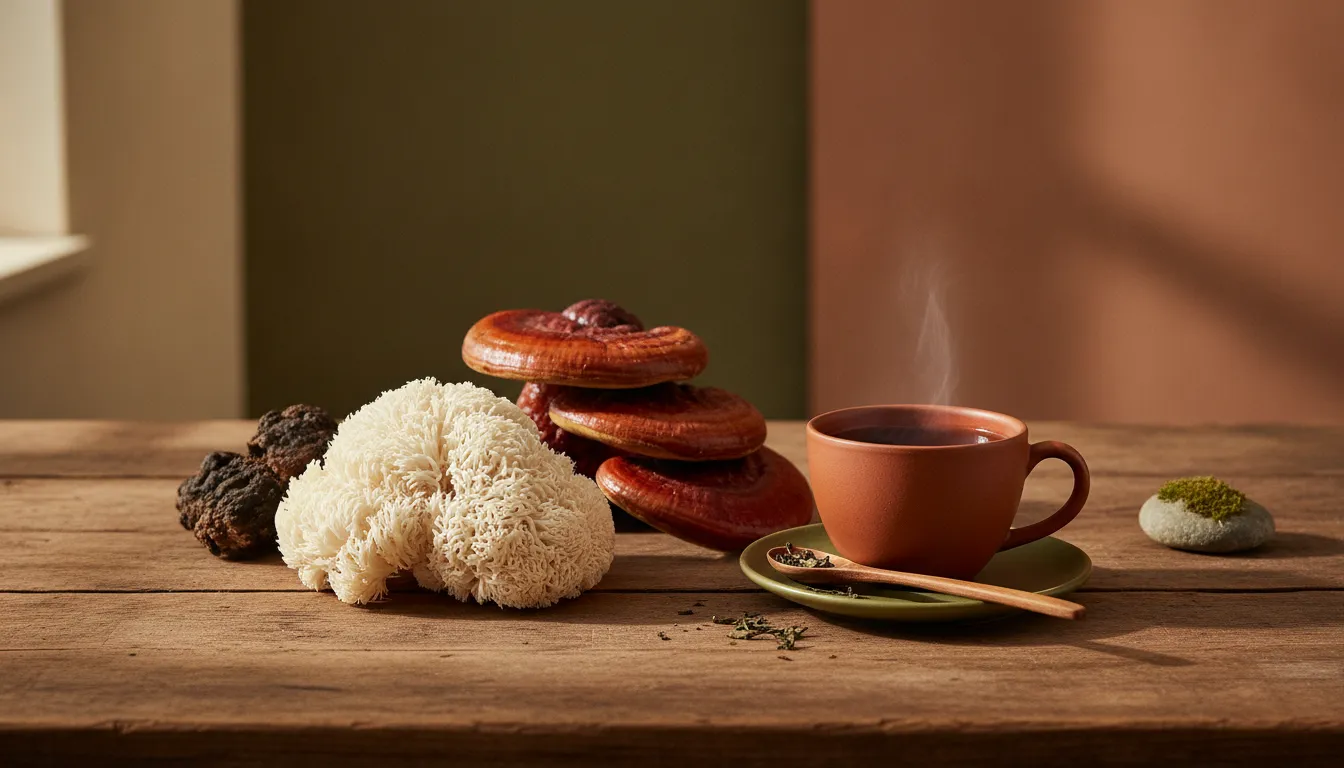
Interest in functional mushrooms has moved beyond novelty powders and coffee blends. Readers are asking a more useful question: what do these fungi actually offer, how strong is the research, and how can someone choose products with care? The answer starts with a distinction. Functional mushrooms are non-psychedelic fungi, including Lion's Mane, Reishi, Chaga, Turkey Tail, and Cordyceps, that people incorporate into everyday wellness routines for nutritional and adaptogenic support. They are not psilocybin, and they should not be presented as cures or substitutes for professional care.
Functional mushrooms for wellness may support an intentional daily routine, but benefits depend on the species, product quality, and person. Research describes promising biological activity, while clinical evidence remains uneven and continues to develop.
This conversation also has a longer history than modern wellness marketing suggests. Indigenous cultures around the world have worked with mushrooms for more than 2,000 years, and that lineage deserves acknowledgement rather than erasure. A grounded approach therefore asks both what tradition teaches and what current evidence can support. Before comparing species or discussing extracts, it helps to clarify what makes a mushroom functional in the first place. And why that category is different from culinary mushrooms and psilocybin.
What Are Functional Mushrooms, Really?
Functional mushrooms are edible fungi valued for more than flavor. They are commonly incorporated into everyday wellness routines as foods, powders, capsules, or liquid extracts. The category includes Lion's Mane, Reishi, Chaga, Turkey Tail, and Cordyceps, among others. These mushrooms are often described as adaptogenic or medicinal mushrooms, although those labels should not be mistaken for a promise to diagnose, prevent, or treat a medical condition.
The story also reaches far beyond the current wellness market. Indigenous cultures around the world have worked with mushrooms for more than 2,000 years, including traditions connected with medicine, recreation, and health. Treating functional mushrooms as a brand-new superfood trend erases that lineage. A more accurate view recognizes the depth of that knowledge while remaining honest about what modern research has and has not established. The historical record is summarized by the University of Utah Health in its overview of functional mushrooms: functional mushrooms and their long history.
Functional does not mean psychedelic
One distinction matters immediately: functional mushrooms are not psilocybin mushrooms. Lion's Mane, Reishi, Chaga, Turkey Tail, and Cordyceps are non-psychoactive culinary and supplement ingredients. They do not produce the altered state associated with psilocybin. Someone can consume a functional mushroom tea, powder, or tincture as part of a normal daily routine without treating it as a psychedelic experience.
Psilocybin belongs to a separate category with different effects, legal considerations, and expectations. It is not an everyday supplement, and functional mushroom products should never be presented as a substitute for psilocybin-assisted therapy or professional medical care. Keeping these categories separate protects consumers and makes it easier to evaluate each product on its own terms.
A practical category, not a guaranteed cure
Functional mushrooms are frequently marketed as superfoods because they contain naturally occurring compounds that attract scientific and consumer interest. Research on medicinal mushrooms has explored a range of biological activities, but the evidence is not interchangeable from one species to another. Findings related to one mushroom, preparation, dose, or population cannot automatically be applied to every product on the shelf.
That is why a grounded approach focuses on quality, transparency, and realistic goals. Consider how a mushroom fits into meals, beverages, or a broader wellness routine, and look for products that clearly identify the species, source, and processing method. For readers ready to explore responsibly, Entheogyn's functional mushroom product line offers a starting point for incorporating these traditional fungi into contemporary daily life.
The Science Behind Functional Mushrooms for Wellness
Research on medicinal and functional mushrooms is promising, but it is not a blank check for every claim on a supplement label. A peer-reviewed review in Integrative Medicine Research describes a broad range of pharmacological activities associated with medicinal mushrooms, including immunomodulating, anti-inflammatory, antioxidative, and neuroprotective effects. These findings help explain why particular species continue to attract interest in nutrition and wellness research. But they do not mean that every mushroom product produces every reported effect.
The distinction between a biological mechanism and a proven outcome matters. Laboratory and preclinical findings can show that a mushroom compound interacts with an immune, inflammatory, or nervous-system pathway. They cannot, by themselves, establish that a commercial tincture will prevent disease or replace individualized medical care. The review also notes that the field needs more controlled clinical trials, along with supplements of safe origin and verified genetic purity. Read the full academic review for its discussion of the evidence and its limitations.
What the cardiometabolic research suggests
One separate systematic review examined mushroom consumption and cardiometabolic health outcomes in the general population. Its focus is useful because it looks beyond a single product claim and asks what the broader body of consumption research may indicate. The findings suggest a possible relationship between eating mushrooms and cardiometabolic health, while also underscoring the need to interpret the evidence carefully. Consumption studies can vary in mushroom species, preparation, serving patterns, participant characteristics, and methods of measuring health outcomes. Those differences make it difficult to translate an association into a specific recommendation for a concentrated supplement.
This systematic review is best read as part of an evolving research picture, not as proof that functional mushrooms treat a heart or metabolic condition. If you have a diagnosis, take prescription medication, or are considering a supplement for a specific health concern, discuss that decision with a qualified clinician.
Looking past the superfood label
"Superfood" is a marketing term, not a scientific category. It can make a product sound universally beneficial while obscuring the questions that actually matter: Which species is present? Which part of the organism was used? Was the material tested for identity, contaminants, and potency? Are the findings based on food consumption, an extract, or a laboratory model? Evidence varies by species and application, so a thoughtful approach treats functional mushrooms as a potential addition to a balanced wellness routine, not a shortcut to guaranteed results.
The most responsible view is both open-minded and precise. Functional mushrooms have meaningful scientific rationale and a long history of traditional use, yet the modern evidence base is still developing. Transparent sourcing, accurate species identification, and well-designed human studies will determine which benefits hold up over time.
Meet the Most Well-Studied Functional Mushrooms
Each species brings a different tradition, composition, and research question to the table. The common wellness descriptions below are useful starting points, not promises of a medical outcome. Research on medicinal mushrooms has identified broad areas of biological activity, including immunomodulating, anti-inflammatory, antioxidative. And neuroprotective activity, but the strength of evidence varies by species, preparation, and intended benefit. The research literature also continues to call for stronger clinical trials.
| Species | Common wellness focus | What the evidence shows | How people commonly consume it |
|---|---|---|---|
| Lion's Mane Hericium erinaceus | Cognitive support, focus, and nervous-system wellness | Preclinical research is especially interested in compounds associated with nerve growth and neuroprotective activity. Human evidence is promising in places but still limited. So it is more accurate to describe Lion's Mane as a subject of cognitive research than as a proven memory solution. | Powder or an extracted tincture blended into coffee, tea, smoothies, or other foods. |
| Reishi Ganoderma lucidum | Stress resilience, relaxation, and sleep support | Reishi has a long history of traditional use and substantial laboratory interest. Studies examine its polysaccharides and triterpenes in several wellness contexts, but sleep and stress claims should remain measured because research quality and outcomes are not uniform. | Tea, powder, or a concentrated tincture. Its naturally bitter flavor often works best in coffee, cacao, or a formulated blend. |
| Chaga Inonotus obliquus | Antioxidant support and general immune wellness | Chaga is widely studied for antioxidant compounds and immune-related activity in laboratory models. Those findings help explain its popularity, but they do not establish Chaga as a treatment for illness. Human evidence remains less developed than marketing language often suggests. | Usually prepared as an extract, tea, or powder. A clearly labeled product matters because concentration and sourcing can differ substantially. |
| Turkey Tail Trametes versicolor | Immune support and everyday resilience | Turkey Tail contains compounds that have drawn considerable interest in immune research, including studies of polysaccharide fractions. The broader medicinal mushroom literature supports immunomodulatory research, but consumers should distinguish investigational findings from a guaranteed personal result. | Extract powder, capsules, tea, or tincture. Extracted formats are common because the raw mushroom is fibrous and not typically eaten as a culinary mushroom. |
| Cordyceps Cordyceps militaris | Energy, stamina, and exercise endurance | Research explores Cordyceps compounds in relation to energy metabolism, oxygen utilization, and exercise performance. Results are mixed and product-specific, with more work needed before broad performance claims can be considered settled. | Powder or tincture added to a morning beverage, smoothie, or food. Look for the exact species and preparation on the label. |
These mushrooms are not interchangeable. A thoughtful selection starts with the experience you want to support, then considers species identity, extraction method, serving information, and testing. Products marketed as functional mushrooms for wellness can sound remarkably confident, while the scientific community is still expanding clinical research and evaluating safe origin and genetic purity. Choose transparent sourcing over a dramatic promise, and treat the table as orientation rather than diagnosis or individualized advice.
Choosing the Best Functional Mushroom Products
A thoughtful label review can tell you more than a polished package or a long list of promised benefits. Since functional mushroom products are often marketed as superfoods while the evidence varies by species and application, compare the substance behind the claims. Research also emphasizes safe origin and genetic purity, not just the mushroom name on the front of the bottle. Marketing and evidence are not always the same thing.
Check whether it contains the whole fruiting body
Look for a clear statement that the product is made from whole fruiting bodies, rather than mycelium grown primarily on grain. Mycelium has a legitimate role in cultivation, but a mycelium-on-grain product should say so plainly and identify how much of the finished material is mushroom versus substrate. A transparent label should name the species, the part of the mushroom used, and the amount per serving. Avoid vague terms such as "mushroom blend" when the individual species and quantities are not listed.
Look for an appropriate extraction process
Many beneficial mushroom compounds are not equally available in their raw form. A quality product may use dual extraction, combining hot water and alcohol, to capture different classes of compounds. Including water-soluble beta-glucans and alcohol-soluble constituents. "Triple-extracted" may indicate an additional processing step, but the manufacturer should explain what that means. Extraction language without a defined process is a marketing signal, not proof of quality.
Require independent laboratory testing
Third-party testing should verify identity, potency, microbial safety, heavy metals, pesticides, and unwanted contaminants. Ask whether a current certificate of analysis is available for the specific batch, not merely a general statement that the brand tests its products. Genetic or species identity testing is especially valuable because safe origin and genetic purity remain important concerns as interest in mycotherapy grows. The scientific literature continues to call for more clinical trials and safer, better-characterized supplements: review the research on medicinal mushroom safety and evidence.
Confirm the sourcing and certification
USDA Organic certification can provide useful assurance about certified agricultural practices and sourcing. It should appear alongside a verifiable certifier, rather than as an unsupported "organic" adjective. Also look for the growing location, manufacturing details, lot number, expiration date, and a customer-service contact. Brands that explain their supply chain make it easier to make an informed choice.
Spot red flags before you buy
Be cautious when a product promises to cure a disease, replace professional care, deliver guaranteed results, or conceal its dosage and testing records. Avoid products with unclear ingredients, no batch information, or no way to verify laboratory results. The CDC has documented severe outcomes associated with improperly labeled or contaminated mushroom-based psychoactive microdosing products, which reinforces the importance of buying tested products from trusted sources: read the CDC safety note.
Entheogyn's functional mushroom line follows this checklist with whole-fruiting-body, triple-extracted, USDA Organic, lab-tested products. That level of transparency gives you a stronger foundation for incorporating functional mushrooms into a grounded wellness routine.
Functional Mushrooms vs. Psilocybin Mushrooms: The Critical Difference
Functional mushrooms and psilocybin mushrooms belong to the same broad biological kingdom, but they are not interchangeable products or experiences. Functional mushrooms such as Lion's Mane, Reishi, Chaga, Turkey Tail, and Cordyceps are culinary and wellness supplements. They contain no psilocybin and are not intended to produce an altered state of consciousness. Psilocybin mushrooms contain the psychoactive compound psilocybin and belong within a regulated therapeutic framework.
That distinction matters for expectations, purchasing decisions, and legal compliance. Functional mushroom products can generally be incorporated into everyday wellness routines according to their labeling and a person's individual needs. Psilocybin is not a daily supplement. Under federal law, psilocybin remains a Schedule I controlled substance. In Colorado, access is limited to the state's regulated natural medicine framework, including licensed settings for adults age 21 and older. Anyone considering this path should understand the difference between a retail supplement and psilocybin-assisted therapy.
| Category | Functional mushrooms | Psilocybin mushrooms |
|---|---|---|
| Legal status | Legal culinary and adaptive wellness supplements when sold and labeled in accordance with applicable laws. | Psilocybin is Schedule I under federal law. Colorado permits regulated natural medicine access under the Natural Medicine Health Act, including licensed settings for adults 21 and older. |
| Effect | Non-psychoactive. Species such as Lion's Mane, Reishi, Chaga, Turkey Tail, and Cordyceps are incorporated to support general wellness, without an intended psychedelic experience. | Psychoactive. Psilocybin can produce changes in perception, mood, cognition, and sense of self. It should not be approached as an everyday supplement. |
| Who it is for | Adults seeking a non-psychoactive addition to a culinary or wellness routine, with product choice guided by personal circumstances and professional advice when appropriate. | Adults 21 and older who are eligible for a regulated Colorado natural medicine service and have determined that the setting is appropriate for their goals and circumstances. |
| Setting | Consumed at home or incorporated into ordinary food and wellness routines. Look for transparent sourcing, whole-fruiting-body ingredients, and laboratory testing. | Accessed through a regulated Colorado framework and supported by a licensed setting and trained professionals. It is not a casual retail purchase or an unsupervised supplement routine. |
Entheogyn keeps these categories distinct. Its functional mushroom line includes whole-fruiting-body, triple-extracted, USDA Organic, lab-tested products for people seeking non-psychoactive wellness support. Its licensed Colorado services address a different intention, preparation, and level of professional structure. Clear labeling and clear language protect consumers, while making room for each mushroom tradition to be understood on its own terms.
Functional Mushrooms for Wellness in Colorado: How Entheogyn Fits
Colorado readers looking for functional mushrooms for wellness often encounter a wide range of products and claims. Entheogyn offers a different starting point: careful sourcing, transparent standards, and professional context. Based in Golden, Entheogyn is a licensed, physician-backed Colorado operator with experience serving people who want a thoughtful approach to natural wellness.
Its functional mushroom product line is built around whole fruiting bodies rather than a vague mushroom-derived blend. The products are triple-extracted, USDA Organic, and lab-tested. Those details do not turn a supplement into a medical treatment, and they do not guarantee a particular outcome. They do give consumers useful information about what they are purchasing and how the products are evaluated.
Quality standards that support informed choices
Whole-fruiting-body sourcing can make a product's identity easier to understand than labeling that emphasizes only generic mycelium or an undisclosed proprietary mixture. Triple extraction is intended to draw out compounds that differ in solubility, while laboratory testing adds another layer of accountability around product quality. USDA Organic certification also provides a defined standard for how qualifying ingredients are grown and handled.
For consumers, the practical value is transparency. You can ask what species are present, which part of the mushroom was used, how the product was extracted, and whether testing supports the label. Entheogyn's approach keeps those questions visible instead of asking people to rely on wellness hype.
A natural bridge to broader wellness work
Functional mushrooms are distinct from psilocybin and can be incorporated into everyday routines as legal, non-intoxicating wellness products. That distinction matters. They are not a substitute for medical care, and responsible brands should avoid promising to treat or cure a condition. Instead, they can be part of a broader conversation about nourishment, reflection, stress management, and sustainable personal practices.
At Entheogyn, that conversation can extend beyond a product purchase. The line may be integrated into immersive journeys, and The Immersive includes a one-month tincture supply. This creates continuity between a structured experience and the routines that follow, without suggesting that a tincture produces the same effects as a psilocybin session.
For people seeking ongoing support, Entheogyn also connects wellness interests with integration and community. The result is a grounded path: begin with clearly described functional mushrooms. Consider how they fit your own goals, and seek qualified guidance when health conditions or medications are involved. That combination of licensed Colorado leadership, physician presence, and rigorous testing is what sets Entheogyn apart in a crowded market.
Safety, Side Effects, and Daily Use Considerations
Functional mushrooms are generally well tolerated by many adults when consumed as directed, but "natural" does not mean risk-free. A new tincture, powder, capsule, or dried mushroom product can cause digestive symptoms such as stomach upset. Nausea, bloating, or changes in bowel habits, especially when introduced in a large amount. Start with the serving guidance on the label and pay attention to how your body responds rather than assuming more is better.
Who should check with a clinician first?
Anyone with a known mushroom or fungal allergy should review the ingredients carefully. Sensitivity may involve the mushroom itself, spores, or other ingredients in a blend, and dried products can still trigger a reaction. Stop consuming a product and seek appropriate medical care if you develop signs of a serious allergic reaction, including swelling, trouble breathing, or widespread hives.
It is also wise to speak with a qualified clinician before adding functional mushrooms to a daily routine if you are pregnant or nursing. Managing a chronic condition, preparing for surgery, or taking prescription medication. In particular, ask about possible interactions with blood-thinning medication or immunosuppressants. A clinician or pharmacist can consider the specific species, extract, dose, and your complete medication list.
Product sourcing is part of safety
Quality control matters because labels and manufacturing standards vary. Look for clear species identification, a complete ingredient list, batch or lot information, and testing for contaminants. Transparent brands should be able to explain whether a product contains whole fruiting body, mycelium, or a combination, and how it is processed. Avoid products that promise to cure disease, replace medical care, or conceal basic information about their contents.
The CDC documented severe health outcomes associated with mushroom-based psychoactive microdosing products that were improperly labeled or contaminated, including cases requiring emergency medical intervention. That warning concerns unregulated psychoactive products, not properly identified non-psychoactive functional mushrooms. But it reinforces the importance of buying from a reputable source with meaningful testing and traceable labeling. See the CDC safety report for the details.
Functional mushrooms are not psychoactive
Functional mushrooms such as Lion's Mane, Reishi, Chaga, Turkey Tail, and Cordyceps are not intended to produce a high or hallucinations. If a product claims that it will make you feel high, treat that as a serious red flag and avoid it. It is describing something other than a standard non-psychoactive functional mushroom supplement. For daily wellness, choose a clearly labeled product from a trusted source. Consume it consistently as directed, and reassess with a clinician if you notice persistent or concerning symptoms.
Browse Entheogyn's lab-tested functional mushroom product lineReady to add a clearly sourced whole-fruiting-body product to your routine? Explore the full line and find an approach that fits your goals before continuing to the frequently asked questions.
Frequently Asked Questions
Are functional mushrooms actually beneficial?
Research suggests that medicinal mushrooms may have immunomodulatory, anti-inflammatory, and neuroprotective activities, but results vary by species and application. A systematic review also found possible cardiometabolic benefits from mushroom consumption. These findings support measured wellness claims, not promises to treat or cure disease. Research review
What is the best functional mushroom to take?
There is no single best choice for everyone. Lion's Mane, Reishi, Chaga, Turkey Tail, and Cordyceps have different traditional uses and research profiles, so choose based on your wellness priorities, product quality, and personal tolerance. Look for transparent sourcing, whole-fruiting-body ingredients, appropriate extraction, and independent testing.
How long does it take for functional mushrooms to work?
The timeline depends on the species, extract, serving pattern, and individual response. Some people notice an experience such as a daily routine fitting comfortably before they notice any specific wellness effect. Research is still developing, so consistent consumption and realistic expectations are more appropriate than promising an immediate result.
Are functional mushrooms safe to consume daily?
Many people incorporate culinary and functional mushrooms into daily routines, but safety is personal. Review ingredients with a qualified healthcare professional if you have allergies, digestive sensitivities, take medication, or are pregnant or nursing. Choose clearly labeled products from reputable sources, and avoid confusing functional supplements with improperly labeled psychoactive mushroom products, which the CDC has linked to severe health outcomes. CDC safety report
Ready to Explore Functional Mushroom Wellness?
Entheogyn's functional mushroom products offer a grounded way to incorporate thoughtfully sourced mushrooms into your everyday wellness routine. Explore the product line to review the options and choose an approach that fits your goals, with clear attention to quality, extraction, and responsible sourcing. Whether you are new to adaptogenic mushrooms or simply looking for a trusted, transparent source, the line is designed to make an informed start feel straightforward.
Explore the functional mushroom product line
To speak with the team about functional mushrooms or Colorado natural wellness, use the connection call form.