
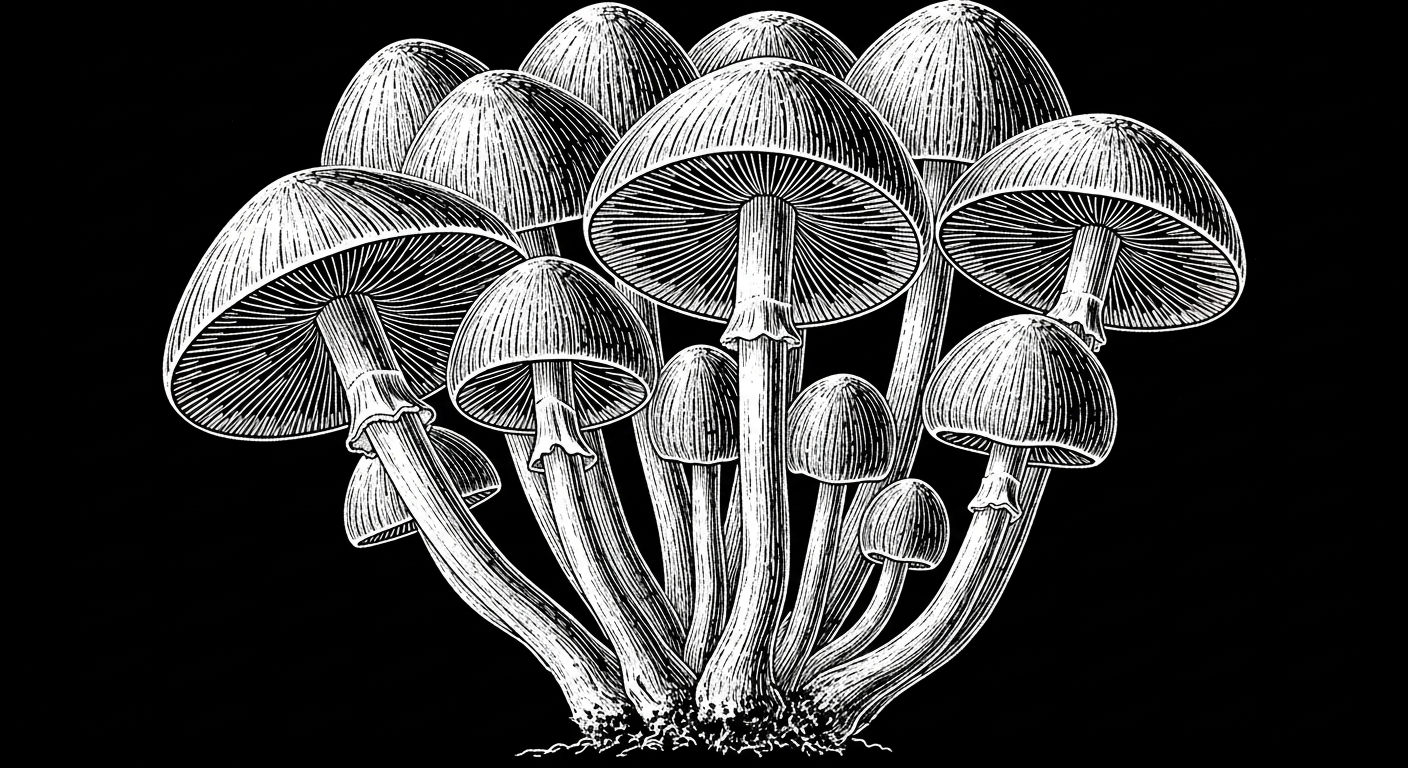
Understanding Psilocybin Mushrooms
An honest, comprehensive look at what psilocybin is, where it comes from, what the research shows, who it's right for, and who it may not be right for.
A History of Healing
Psilocybin mushrooms have been worked with for spiritual and healing purposes for thousands of years, with evidence of ceremonial relationship dating back at least 6,000 years in Mesoamerica. Cave paintings in Algeria and Mexico suggest an even older connection between humans and these fungi.
For the Mazatec people of Oaxaca, Mexico, hongos sagrados, sacred mushrooms, were central to healing ceremonies known as veladas. These nighttime rituals involved prayer, song, and sacred work with the mushrooms to access spiritual guidance and heal illness. They were never meant to be shared with strangers.
Western science's encounter with psilocybin is largely attributed to R. Gordon Wasson, a J.P. Morgan vice president and amateur mycologist, who attended a Mazatec velada led by María Sabina in 1955. In 1957, he published a vivid account in Life magazine under the headline "Seeking the Magic Mushroom", naming Sabina's village, Huautla de Jiménez, and effectively placing her and her community in the crosshairs of the outside world.
"From the moment the foreigners arrived, the hongos lost their purity. They lost their force; the outsiders spoiled them. From now on they won't be any good. There's no remedy for it."
María Sabina
The consequences were severe. Thousands of tourists, hippies, and spiritual seekers descended on Huautla de Jiménez seeking their own experience. Sacred veladas, private healing ceremonies, became spectacles. María Sabina's home was burned down by members of her own community, who blamed her for revealing what was never meant to be revealed. She was ostracized, harassed, and spent years in poverty. Mexican authorities arrested her repeatedly on suspicion of drug trafficking.
Wasson's article also set Albert Hofmann, the Swiss chemist who had previously synthesized LSD at Sandoz Laboratories, on the path to isolating psilocybin in 1958. Research flourished through the 1960s until the Controlled Substances Act of 1970 shut it down entirely. Decades of prohibition followed until Johns Hopkins and NYU reignited the science in the early 2000s.
Oregon led the way in 2020, becoming the first state in the nation to legalize regulated psilocybin services through Measure 109, a landmark moment that proved the political will existed to treat this medicine with seriousness and care. Colorado followed in 2022 with Proposition 122, where Entheogyn is now a fully licensed healing center. We hold the story of María Sabina and the Mazatec people as a central ethical obligation, not a footnote. Our work is built on reciprocity, not extraction.
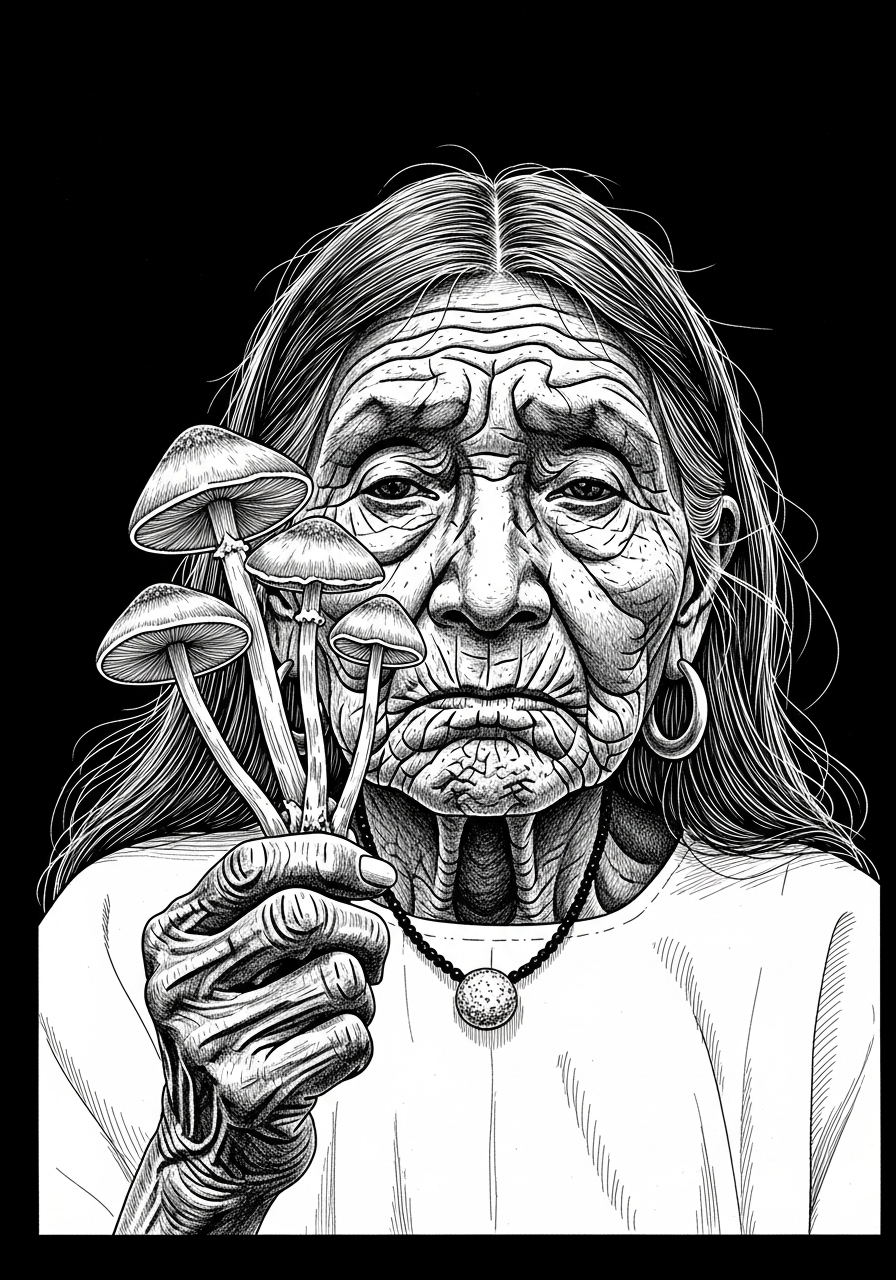
María Sabina (1894–1985)
A Mazatec curandera from Huautla de Jiménez, Oaxaca, María Sabina was one of the most revered healers of the 20th century. She worked with sacred mushrooms in healing ceremonies for her community long before Western science became aware of them. After Wasson's account brought her to global attention, she experienced significant disruption to her life and community, a sobering reminder of the importance of reciprocity and respect in our relationship with these medicines and the cultures that steward them.
María Sabina. Photo by Gusmano Cesaretti.
What is Psilocybin
Psilocybin is a naturally occurring tryptamine alkaloid, a small molecule produced by more than 200 species of fungi, found on every inhabited continent on earth. It is the compound that gives the Psilocybe genus of mushrooms their profound therapeutic and psychoactive properties, though psilocybin itself is not pharmacologically active.
Psilocybin is a prodrug. When received by the body, it is rapidly converted into psilocin, formally known as 4-hydroxy-DMT (4-HO-DMT), through a dephosphorylation process that occurs primarily in the gut and liver. Psilocin is the molecule that reaches the brain and produces the experience.
Psilocybin is structurally nearly identical to serotonin.
Both are tryptamines, molecules built around the same indole ring structure. This structural similarity is why psilocin binds so readily to the brain's serotonin receptors, particularly the 5-HT2A receptor subtype. The 5-HT2A receptor is found in high concentrations in the prefrontal cortex, and its activation is understood to be central to the therapeutic and perceptual effects that make this medicine so remarkable.
Chemical Class
Tryptamine alkaloid
Active Metabolite
Psilocin (4-HO-DMT)
Primary Target
5-HT2A serotonin receptor
Duration
4–6 hours (dose-dependent)
Dependence Potential
None, no physical withdrawal
Natural Source
200+ fungal species worldwide
The effects of psilocybin are profoundly context-dependent. The same molecule in the same dose can produce entirely different experiences depending on the internal state, intentions, environment, and relational support of the person receiving it. This is not a quirk of the compound. It is its nature. And it is precisely why set, setting, and facilitator skill are not peripheral considerations, they are inseparable from the medicine itself.
Unlike alcohol, opioids, or stimulants, psilocybin does not produce physical dependence. There is no withdrawal syndrome. Tolerance develops rapidly with repeated exposure, which in practice discourages habitual patterns, and resolves within days. The compound has one of the highest therapeutic index ratings in all of pharmacology.
Psilocybin is not a sedative, a stimulant, or a dissociative. It is formally classified as a serotonergic psychedelic, a category of compounds that, despite decades of prohibition, are now among the most rigorously studied substances in contemporary psychiatric research.
Not a drug in the conventional sense
The cultural image of "magic mushrooms", recreational, chaotic, unpredictable, does not describe the medicine we work with at Entheogyn. What we offer is a carefully cultivated, precisely dosed, clinically supported encounter with a natural molecule that has held a sacred relationship with human consciousness for millennia. It is ancient. It is serious. It is to be respected.
Context Is Everything
Set & Setting
Of all the variables that shape a psilocybin experience, the compound itself may be the least important. The internal landscape you bring into the session, and the external environment that holds you through it, determine, more than any dose, what becomes possible.
Mindset
Your internal state at the time of the experience, your intentions, emotional readiness, fears, hopes, unresolved grief, and the quality of your relationship with yourself. Set is the sum of the preparation you have done, the honesty you have brought to your own process, and the willingness with which you arrive.
A contracted, defensive, or unexamined mindset does not prevent the medicine from working. But it does shape what the medicine works with. Preparation is not optional, it is the work that makes the session possible.
Environment
The physical space, the sensory conditions, light, sound, temperature, comfort, and, crucially, the relational field. Who is in the room. Whether you feel seen, safe, and not alone. The quality of trust between you and your facilitator.
Research consistently shows that the same molecule, in the same dose, produces radically different experiences depending on these conditions. A clinical room with fluorescent lights and no relational warmth is a different medicine than a carefully held healing space with a trusted guide. Environment is not atmosphere, it is pharmacology.
"The drug is a key that opens a previously closed door. But where that door leads depends entirely on the room the person is standing in when they turn the key."
Stanislav Grof, M.D., pioneering psychedelic researcher
The Entheogyn Container
Every element of our approach, from the preparation sessions we offer weeks before a session, to the healing space we have designed, to the licensed facilitators who accompany each person throughout, is a direct expression of our understanding of set and setting. We do not offer psilocybin as a standalone intervention. We offer a held process. The medicine works in the context of relationship. That is not an add-on. It is the point.
How It Works
Psilocybin temporarily quiets the brain's Default Mode Network (DMN), the system responsible for ego, rumination, and rigid self-narrative. By disrupting the DMN, psilocybin allows brain regions that rarely communicate to connect in new ways.
This hyper-connected state promotes neuroplasticity: the brain's ability to form new patterns, break entrenched cycles, and "rewire" itself. These changes are associated with lasting reductions in depression, anxiety, and addictive behavior.
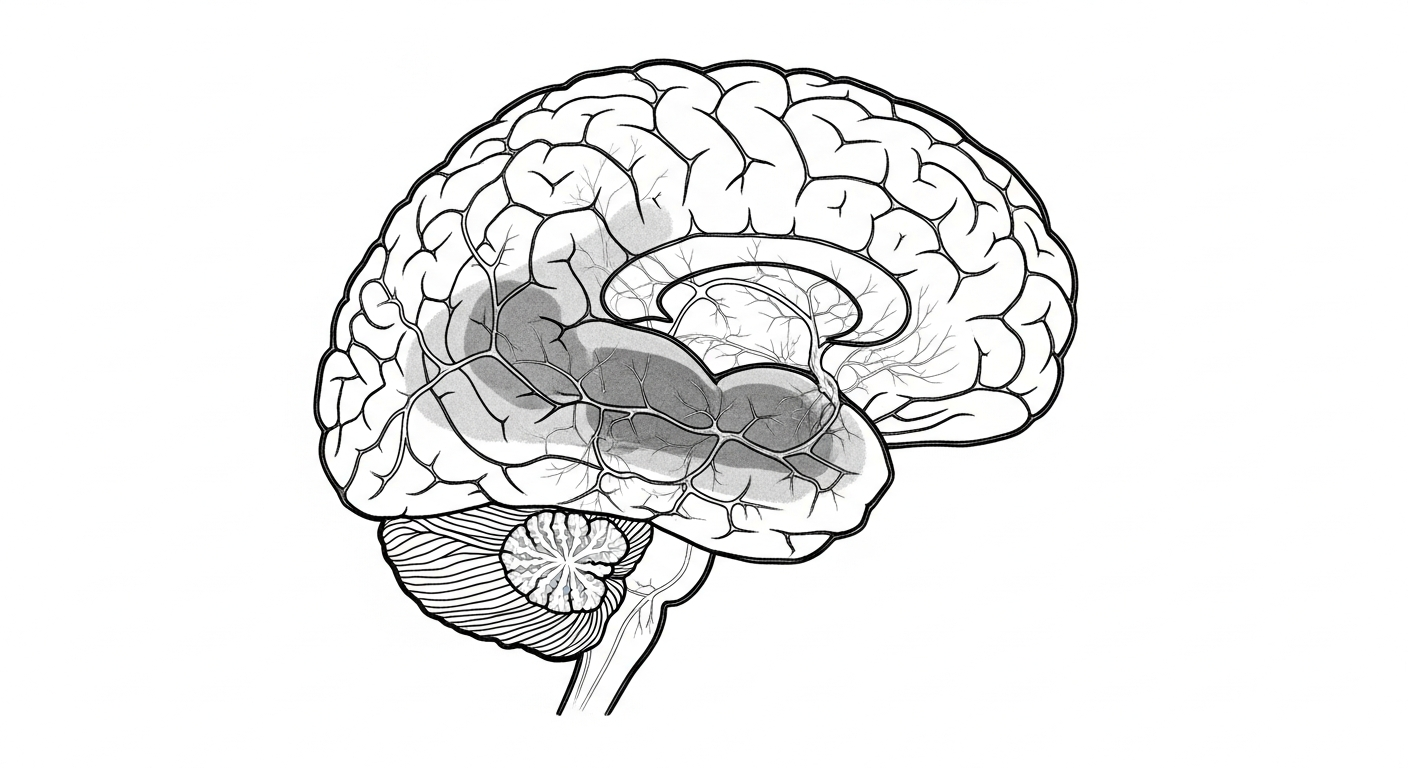
Default Mode Network (DMN), the brain's self-referential hub, active during rumination and ego-construction. Psilocybin temporarily suppresses the DMN, enabling novel cross-network connectivity associated with therapeutic insight.
Clinical Efficacy
Research from Johns Hopkins, NYU, Imperial College London, and COMPASS Pathways has demonstrated psilocybin's profound efficacy, including for conditions that have not responded to conventional treatments.
- Rapid onset of antidepressant effects, often after a single session
- Sustained benefits lasting months to years post-session
- Low physiological toxicity; no known addiction potential
- Deepens emotional connection rather than blunting it
- Promotes lasting insight and psychological flexibility
Key Studies & Research
We encourage you to read the science for yourself. Below are landmark peer-reviewed studies and clinical trials forming the foundation of modern psilocybin research.
COMPASS Pathways Phase IIb Trial
COMPASS Pathways / NEJM · 2022
Psilocybin 25mg produced significant reductions in MADRS depression scores vs placebo in treatment-resistant depression.
Psilocybin for Major Depressive Disorder
Johns Hopkins Medicine · 2021
Two psilocybin sessions produced rapid, large, and sustained antidepressant effects in adults with MDD across 12 months.
Psilocybin for Alcohol Use Disorder
NYU Langone / JAMA Psychiatry · 2022
Psilocybin significantly reduced heavy drinking days compared to antihistamine placebo over a 32-week period.
Psilocybin & End-of-Life Anxiety
NYU / Johns Hopkins · 2016
A single high-dose psilocybin session produced substantial and sustained decreases in depression and anxiety in cancer patients.
PTSD & Psilocybin: A Systematic Review
Frontiers in Psychiatry · 2023
Emerging evidence supports psilocybin as a promising adjunct for PTSD, with high response rates in early-phase trials.
MAPS MDMA Phase 3 & Psilocybin Landscape
Nature Medicine · 2023
Broad overview of psychedelic-assisted therapy efficacy across conditions, regulatory pathways, and safety profiles.
Conditions Psilocybin May Support
You do not need a clinical diagnosis to work with psilocybin. Many people come to us simply as human beings seeking clarity, meaning, healing, or growth. For those who do carry a specific condition, the research above speaks for itself.
Who We Do Not Currently Work With
We are deeply committed to safety. Psilocybin is not appropriate for everyone, and we take our screening process seriously. Our physician-led intake process ensures every person is a good fit before any session is considered.
Current Antidepressant Use
Individuals currently taking SSRIs, SNRIs, MAOIs, or other antidepressant medications are not eligible to work with us at this time. These medications significantly blunt or alter the psilocybin response, often rendering it ineffective, and certain combinations (particularly MAOIs) carry serious risks. A supervised taper, when medically appropriate and desired by the client, is something we can discuss with our medical team.
Active Suicidality
We do not work with individuals who are in acute suicidal crisis or who have active suicidal ideation. Psilocybin can amplify emotional states and is not appropriate for immediate crisis stabilization. For individuals in this situation, we compassionately recommend exploring ketamine-assisted therapy, which has demonstrated rapid antidepressant and antisuicidal effects and is accessible through licensed providers. We are happy to provide referrals.
Additional Contraindications
This list is not exhaustive. Additional contraindications exist and will be identified through our comprehensive intake process. Every person is screened individually by our clinical team before a session is approved.
What a Psilocybin Session Can Feel Like
No two experiences are the same, and not all of them are easy. Psilocybin can bring beauty, insight, and profound healing. It can also bring difficulty: fear, grief, confusion, and material you may not have been expecting to meet. This is not a reason to avoid it. It is a reason to go in prepared.
Below is a general arc, a map, not a guarantee. Your preparation sessions will be where we explore what this specific journey might hold for you, and how to work with whatever arises.
The onset can bring warmth, visual softening, or colors becoming more vivid, but also nausea, anxiety, or a feeling of resistance. Some people move through this phase easily. Others find it unsettling. Both are normal. Your facilitator will be with you throughout.
The peak is where the most significant, and sometimes most difficult, material arises. This can include profound joy, awe, love, and connection. It can also include fear, grief, confusion, ego dissolution, or encounters with deeply suppressed emotion. Challenging experiences are not failures. They are often where the most meaningful healing occurs. We prepare you for this.
As the intensity subsides, many people enter a quieter, more reflective space. Insights may crystallize. Some feel peace or clarity. Others feel emotionally raw or exhausted. There is no right way to feel here, and no pressure to feel anything in particular.
The days following a session can be profound or challenging. Many people report a lasting sense of openness and perspective. Others experience a period of emotional processing, fatigue, or tenderness. Integration support is built into our program because the session is only part of the work.
Preparation Is Where Expectations Are Set
Before any session, you will meet with your facilitator in dedicated preparation sessions. This is where we have honest conversations about what you might encounter, including the difficult parts. We will discuss your intentions, history, fears, nervous system tendencies, and any material that may arise. We will not promise you a transcendent experience. We will prepare you to work with whatever comes. Psilocybin does not always give you what you want. It tends to give you what you need, and those are not always the same thing.
Psilocybin Is Decriminalized in Colorado
Colorado is one of the first states in the United States to decriminalize psilocybin and create a regulated framework for psilocybin-assisted healing services. Here is what that means, and what it means for you.
Proposition 122: The Colorado Natural Medicine Health Act
In November 2022, Colorado voters passed Proposition 122, also known as the Natural Medicine Health Act. This landmark legislation decriminalized the personal use and possession of psilocybin and psilocin for adults 21 and older, and created a formal licensing framework for regulated psilocybin healing services, making Colorado only the second state in the U.S. to do so.
The Regulatory Framework
Regulated psilocybin services in Colorado are overseen by the Colorado Department of Revenue's Natural Medicine Division. The Division licenses cultivators, product manufacturers, testing facilities, healing centers, and facilitators. Every step of the supply chain, from grow room to session room, is regulated, tracked, and subject to rigorous compliance standards.
Entheogyn's Licensing
Entheogyn holds active Colorado state licenses as both a natural medicine cultivator and a licensed healing center, making us the world's first fully licensed, vertically integrated psilocybin healing center. Our facilitators are individually licensed by the state, and all services are conducted in full compliance with Colorado law and the Natural Medicine Division's regulations.
Federal Status
Psilocybin remains a Schedule I controlled substance under U.S. federal law. However, Colorado state law explicitly permits and regulates its use within licensed healing centers under the Proposition 122 framework. Our services are conducted exclusively within the state of Colorado, in full compliance with state law. Clients are not at risk of legal jeopardy for participating in a licensed, regulated psilocybin session in Colorado.
What this means for you: When you work with Entheogyn, you are engaging in a state-regulated therapeutic service conducted by licensed professionals within an approved healing center. Psilocybin is decriminalized in Colorado, and our services are conducted in full compliance with state law under the Proposition 122 framework. You are supported by a clinical and administrative infrastructure built to meet the highest standards the Natural Medicine Division requires.
Our Medicine
At Entheogyn, we cultivate whole-fruiting body psilocybin cubensis mushrooms in-house and extract psilocin directly from our harvest, giving us complete control over potency, purity, and consistency from spore to session.
Grown with Intention
We believe the conditions in which medicine is grown shape the medicine itself. Our mushrooms are cultivated in a carefully tended environment where the energy, physical, emotional, and energetic, is held with the same care we bring to our healing sessions. Every decision in the grow room is made consciously.
They Listen to Music
Our mushrooms grow in the presence of music. Sound vibration has long been understood to influence biological growth, and we take this seriously, curating what our fungi hear throughout their development. We grow with the understanding that living organisms are aware of their environment in ways science is only beginning to measure.
Protective of Their Energy
We are deeply attentive to the energy around and within our grow space. Stress, negativity, and carelessness have no place here. The people who tend the mushrooms do so with reverence. The result is a clean, high-integrity extract sourced from a fully traceable, organically grown harvest, medicine that carries the intention it was grown in.