
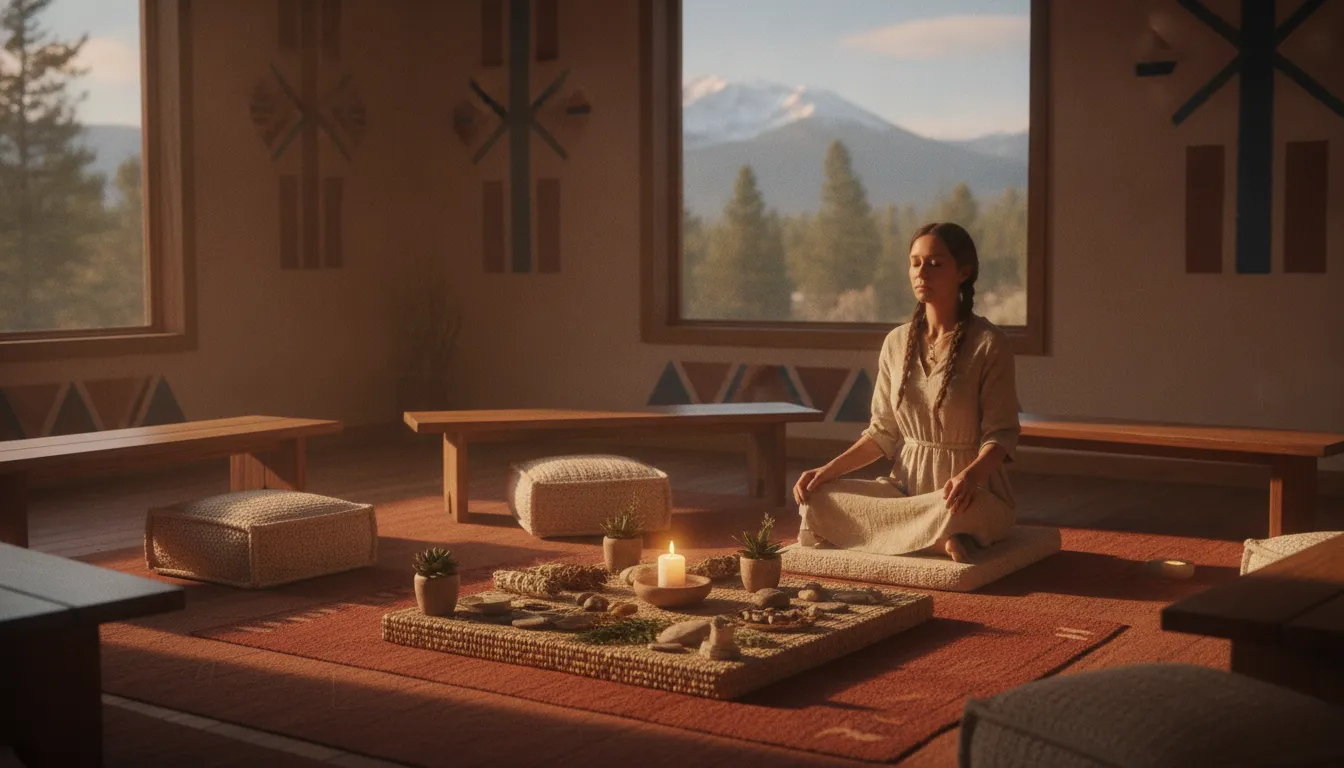
Colorado's natural medicine framework is more specific than a simple yes-or-no answer. The state has created a regulated path for adults seeking psilocybin services, while federal law still classifies psilocybin as a Schedule I substance.
Yes, is psilocybin therapy legal in colorado has a qualified answer: Colorado permits regulated psilocybin services for adults 21 and older through licensed healing centers and facilitators under the Natural Medicine Health Act. Also known as Proposition 122. Services must occur within Colorado.
That distinction matters. Proposition 122 did not create dispensary-style retail access or make every setting appropriate for a facilitated experience. It established boundaries around personal possession and cultivation, then created a licensing structure intended to support preparation, safety, and intentional care. For a fuller walkthrough of the regulatory rollout and licensing landscape, read our guide to Colorado natural medicine regulation and psilocybin therapy. Understanding what the measure changed is the clearest place to begin.
What Did Colorado Proposition 122 Actually Legalize?
Colorado Proposition 122, formally called the Natural Medicine Health Act, was approved by voters in November 2022. It changed state law in two connected ways: it protected certain personal relationships with psilocybin for adults 21 and older. And it established a regulated framework for natural-medicine services. The measure did not create an open retail market or make every form of psilocybin activity lawful.
Under the measure, adults 21 and older received protection for personal engagement with, possession of, cultivation of, and sharing of psilocybin without remuneration. In plain language, Colorado law treats these personal activities differently from commercial distribution. The protection is tied to age and to the boundaries established by state law. It does not authorize someone to sell psilocybin independently, provide services without the required permissions, or ignore safety and operating requirements.
The Natural Medicine Health Act also created a pathway for regulated access. Colorado's Natural Medicine Division oversees licensed businesses, while the state's regulatory structure includes requirements for healing centers and licensed facilitators. In a regulated setting, the relationship with the medicine is held within an intentional container rather than a retail transaction. Preparation, informed consent, the physical environment, and integration all matter to a responsible experience.
What Proposition 122 did not legalize
Colorado does not have psilocybin dispensaries modeled on cannabis dispensaries. Retail sales are not permitted, and there is no open retail market where a person can purchase psilocybin for independent consumption. Access to regulated services occurs through authorized settings and licensed facilitators, not through a storefront shelf. The state's official natural-medicine FAQ explains this distinction directly: Colorado's Natural Medicine Division describes the limits of Proposition 122.
Federal law is a separate matter. Psilocybin remains classified as a Schedule I substance under federal law, even though Colorado created state-level protections and a regulated service framework. That difference is why Colorado-based services must remain within the state's legal and licensing boundaries. A state-law protection is not the same as federal authorization, and it does not automatically extend across state lines.
So, is psilocybin therapy legal in Colorado? The careful answer is yes, when the service is provided within Colorado's regulated natural-medicine framework and the client meets the eligibility requirements. Proposition 122 opened a lawful path for healing-centered work, but it did so through structure, accountability, and clear limits, not through unrestricted commercialization.
Who Is Allowed to Access Psilocybin Therapy in Colorado?
Colorado's regulated framework sets a clear starting point for eligibility: clients must be adults who are at least 21 years old. Under the Natural Medicine Health Act, adults 21 and older may access natural medicine services through the state's regulated system. This age requirement applies regardless of whether someone is a Colorado resident or is physically present in the state for a scheduled service.
Location is the next essential consideration. Entheogyn provides services only within Colorado state boundaries because the legal framework is state-specific. A Colorado resident may inquire about care in Colorado, and an adult who lives elsewhere may travel to Colorado for an eligible, properly arranged service. Psilocybin therapy cannot be delivered remotely across state lines, and a Colorado service does not create permission to provide the same service in another state. Federal law remains unchanged, with psilocybin classified as a Schedule I controlled substance.
Do I need a referral?
The regulated framework does not require a physician referral as a general entry condition. That does not mean every inquiry automatically proceeds to a session. Entheogyn places medical screening, preparation, and informed consent at the center of the process. A consultation allows the team to discuss health history, current medications, goals, expectations, and whether the setting is appropriate. The screening process protects client wellbeing while keeping the conversation grounded in the actual Colorado rules.
Eligibility also depends on the service environment. Colorado does not operate a retail dispensary model for psilocybin. Regulated services occur through licensed businesses and are administered by licensed facilitators, rather than through a walk-in retail transaction. Colorado's Department of Revenue licenses and regulates natural medicine businesses, while the Department of Regulatory Agencies licenses and regulates facilitators. These responsibilities create separate layers of oversight for the organization providing the service and the professional facilitating it. Colorado's Natural Medicine Division explains the regulated access framework.
For a prospective client, the practical checklist is straightforward:
- Be 21 or older.
- Be physically in Colorado for the service, whether as a resident or a visitor.
- Complete Entheogyn's screening and consultation process.
- Participate through a licensed Colorado setting and facilitator.
Meeting the age and location requirements is the beginning of eligibility, not a promise of a particular outcome. If you are considering psilocybin therapy, a consultation can clarify the process and the safeguards before you make a decision.
What Is a Licensed Natural Medicine Healing Center?
Colorado's Natural Medicine Health Act created a regulated business framework for natural medicine services. The state's licensed business categories include Cultivations, Healing Centers, Manufacturers, and Testing Facilities. Each category serves a distinct role in establishing a controlled chain of care, from growing and preparing natural medicine to testing materials and providing facilitated sessions. The Colorado Natural Medicine Division's frequently asked questions describes this licensing structure and the responsibilities of the agencies overseeing it.
A Healing Center is not a retail dispensary. Colorado does not permit psilocybin retail sales in the same model as a dispensary. Instead, regulated access occurs in an approved setting with a licensed facilitator present. That distinction matters because the setting, preparation, screening, session support, and integration process all belong to the care container. The legal framework is designed around an intentional service, not a product transaction.
What vertical integration means
Entheogyn is Colorado's first licensed, vertically integrated psilocybin healing center, based in Golden, Colorado. Vertical integration means the organization operates across the full psilocybin value chain: cultivation, clinical care, and facilitator education. Rather than treating those functions as unrelated parts of a supply chain, this model creates continuity between the medicine. The people responsible for its care, and the professionals who facilitate the client experience.
That continuity can support stronger quality practices. Cultivation is connected to the center's standards for handling and preparation. Clinical care remains connected to the setting in which a session occurs. Facilitator education can reflect the same physician-led, science-grounded principles that inform the center's care model. Entheogyn's medical leadership includes Dr. Dana T. Lerman, MD, whose clinical perspective helps keep the work attentive to screening, preparation, safety, and appropriate boundaries.
Safety, science, and reciprocity
Licensure does not turn psilocybin into an FDA-approved treatment or promise a cure. It establishes a Colorado framework for regulated natural medicine services. Responsible care still requires humility, careful preparation, and honest conversations about whether a session is appropriate for a particular person.
Entheogyn also places this work within a longer indigenous lineage. Scientific rigor and physician-led care do not replace the teachings and reciprocity practices carried by the communities who have stewarded these traditions. They should inform a respectful container alongside attention to set, setting, consent, and integration. To understand the state framework behind licensed healing centers, read Colorado natural medicine regulation and psilocybin therapy. To learn how the regulated service is structured, visit psilocybin therapy.
How Is Legal Psilocybin Therapy in Colorado Different from Underground Settings?
For anyone asking, "is psilocybin therapy legal in colorado," the key distinction is between personal decriminalization and a regulated service. Colorado's Natural Medicine Health Act, also known as Proposition 122, protects certain personal activity for adults 21 and older. It does not turn every private session into a lawful commercial offering. Colorado's framework restricts service delivery to regulated settings administered by licensed facilitators, rather than retail dispensaries or informal providers.
That distinction matters because a client deserves more than access to psilocybin. A lawful center is accountable for the conditions surrounding the session, including eligibility screening, preparation, the physical environment, facilitator credentials, and safety procedures. An underground setting may have sincere intentions, but it does not provide the same enforceable protections or clear avenue for accountability.
| Dimension | Legal regulated setting | Underground setting |
|---|---|---|
| Legality and regulation | Operates within Colorado's Natural Medicine Health Act framework and applicable state rules. | Operates outside the licensed business framework, with no state approval for the service. |
| Facilitator licensing | Sessions are administered by facilitators licensed through Colorado's regulatory system. | Credentials may be informal, unverifiable, or absent. |
| Dose and quality control | Procedures can address identity, preparation, dosing, and consistency within a regulated center. | Origin, potency, composition, and dosing may be uncertain. |
| Medical screening | Structured intake can identify health history, medications, contraindications, and support needs. | Screening may be incomplete or rely only on informal disclosure. |
| Set, setting, and container | Preparation, intentional surroundings, session support, and integration are built into the container. | Conditions may vary widely and may not be designed for emotional or physical safety. |
| Safety oversight | Licensed operations can maintain defined protocols, records, emergency planning, and supervision. | There may be no standardized protocol, independent oversight, or reliable emergency plan. |
| Liability | A licensed business has identifiable operators and obligations within the regulatory framework. | Responsibility may be unclear, leaving the client with limited recourse after an incident. |
Colorado's Department of Revenue licenses natural medicine businesses, while the Department of Regulatory Agencies licenses and regulates facilitators. The state's FAQ also makes clear that retail sale is not permitted in the manner of a dispensary, and that regulated access occurs through licensed settings. Read Colorado's natural medicine FAQ for the current regulatory distinction.
Personal decriminalization is therefore not a substitute for a licensed center. When evaluating psilocybin therapy in Colorado, ask who holds the relevant licenses, how screening is conducted, what safety procedures are in place, and how the container is maintained from preparation through integration. A compliance-first setting does not remove every risk, but it makes those risks visible and gives the client a clearer standard of care.
What Are the Current Rules for Facilitators and Clients?
Colorado's Natural Medicine Health Act creates a regulated relationship between an eligible adult, a licensed facilitator, and a licensed healing center. The framework is not a retail model. The Colorado Department of Regulatory Agencies (DORA) licenses and regulates facilitators, while the Department of Revenue's Natural Medicine Division licenses and regulates natural medicine businesses. Colorado's official FAQ explains the division of regulatory responsibilities.
Clients must be at least 21 years old to access natural medicine services within the regulated framework. Services also remain limited to Colorado. A compliant session is therefore more than an appointment at a location. It is a carefully held process in which preparation, the physical and relational setting, the session container, and integration all matter.
Eligibility and medical screening come first
The process begins with an eligibility review, including age and Colorado access requirements. At Entheogyn, physician-led medical screening with Dr. Dana T. Lerman MD helps identify relevant health considerations before a client enters the session process. This step supports informed participation and responsible care. It is not a promise of a clinical cure, and it does not replace a person's ongoing relationship with their established medical providers.
Preparation establishes the container
Preparation gives the client space to clarify intentions, discuss boundaries, learn what the session may involve, and establish a grounded plan for support. The facilitator's presence is attentive to the client's inner process while the environment remains intentional. Set and setting are not decorative details. They shape whether a person feels safe enough to remain present with a difficult or meaningful experience.
The facilitated session occurs in a licensed healing center
The session occurs in a Colorado-licensed healing center with a facilitator licensed through DORA. Retail dispensary access is not part of this model. Colorado law restricts regulated access to supervised settings administered by licensed facilitators, rather than an ordinary storefront transaction. Entheogyn's approach brings reverence and clinical responsibility together within this legally defined container. Learn more about psilocybin therapy and the setting in which sessions are held.
Integration carries the experience forward
Integration helps a client reflect on what emerged, connect insights with daily life, and identify practical next steps with appropriate support. It is a core part of the process, not an optional afterthought. Clients who feel called to hold this kind of space for others can explore natural medicine facilitator training, which approaches facilitation as a serious responsibility grounded in preparation, ethics, presence, and continued learning.
These safeguards answer an important part of the question. "is psilocybin therapy legal in Colorado?" State regulation permits a defined pathway for adults 21 and older, but legality depends on staying within that pathway. Colorado access, licensed professionals, a licensed healing center, careful screening, and an intentional container are essential parts of the work.
Frequently Asked Questions
Is psilocybin therapy legal in Colorado?
Yes, Colorado created a regulated framework for psilocybin services through the Natural Medicine Health Act, also known as Proposition 122, approved by voters in 2022. The framework applies to adults 21 and older and separates licensed services from personal activity protected under state law. Colorado's Department of Transportation summarizes the state framework.
What did the Natural Medicine Health Act change?
Proposition 122 decriminalized personal possession, cultivation, and sharing without remuneration of certain natural medicines for adults 21 and older. It also established a regulated path for natural medicine services. State agencies continue to define and oversee the requirements for licensed businesses and facilitators. The Colorado Natural Medicine Division outlines these protections and rules.
Who can access psilocybin services in Colorado?
Adults who are at least 21 years old are eligible to access natural medicine services within Colorado's regulated framework. Services are available within Colorado state boundaries, and each licensed center may have its own screening, preparation, and participation requirements. Confirm eligibility and logistics during an initial consultation.
Can I buy psilocybin from a Colorado dispensary?
No. Colorado does not permit retail psilocybin sales through a dispensary model. Regulated access occurs in approved settings, where licensed facilitators administer natural medicine services. The state Department of Revenue licenses natural medicine businesses, while the Department of Regulatory Agencies licenses and regulates facilitators. See the state FAQ for the current regulatory structure.
Ready to Schedule a Consultation?
Understanding Colorado's natural medicine framework is an important first step. A personal consultation can help you ask thoughtful questions, understand how preparation and integration fit into the process, and decide whether this relationship-centered setting aligns with your intentions. Entheogyn welcomes a conversation before you make any decision about beginning psilocybin therapy. Reach out through the connection call form to connect with the team and discuss your questions in a grounded, respectful way.