

Is psilocybin therapy safe? At Entheogyn, safety is a clinical and relational process built through medical screening, preparation, a carefully held setting, attentive facilitation, and a clear response plan. It is not a blanket promise, and it does not mean natural medicine is appropriate for every person.
Learn about Entheogyn's Colorado psilocybin therapy
For appropriately screened adults, psilocybin sessions may have a favorable safety profile when the medicine is engaged with in a controlled setting and under professional supervision. Entheogyn adds physician-supported screening, preparation, observation, and follow-up. Eligibility remains individual, and no responsible provider can guarantee a risk-free experience.
A session can involve temporary changes in blood pressure, nausea, headache, fatigue, anxiety, or other physical and emotional responses. The relevant question is not whether risk can be reduced to zero. It is whether a participant is considered carefully, understands the boundaries of the service, and enters a container prepared to respond when needs change. This article explains the safeguards and limitations that deserve attention before a decision.
Is Psilocybin Therapy Safe? What Screening Looks Like Before a Session
Entheogyn's screening process considers age, location, health history, mental-health history, current medicines, goals, consent, and potential contraindications before a session is approved. The physician-supported team may request more information, recommend another medical conversation, postpone participation, or decline care when the proposed setting cannot manage the identified risks.
Screening is one of the central safety controls in a physician-supported Colorado natural medicine setting. It helps the care team understand a participant's health, identify factors that may increase risk, and determine whether this form of support is suitable. Screening is not a formality, an online quiz, or a promise that care will proceed.
- Eligibility and goals are discussed. An initial conversation considers why a person is seeking psilocybin therapy, what they hope to address, and whether the service fits their circumstances. Entheogyn serves adults 21 and older through Colorado-based services. Location, age, informed consent, and the requirements of a licensed setting belong in the first review.
- Physical health history is reviewed. The clinical team may ask about current and past conditions, cardiovascular concerns, neurological history, allergies, procedures, and other details relevant to safety. This information gives the physician-supported team a fuller picture and may show that additional records or assessment are needed.
- Mental-health history is considered carefully. Screening can include relevant diagnoses, symptoms, previous treatment, hospitalization, trauma history, and current or past concerns about self-harm. A clinical review reported that suicidal ideation and behavior were infrequent in the trials examined, but occurred mainly among participants with a prior history of ideation or attempts (reviewed clinical evidence).
- Medicines and supplements are discussed. Participants should provide a complete, current list of prescribed medicines, over-the-counter products, and supplements. Do not stop or change a medicine without direction from the prescribing clinician. Possible interactions and the broader health context require qualified review.
- Consent and next steps are explained. Before proceeding, a participant should understand the session structure, possible physical or psychological responses, alternatives, and the limits of current evidence. Research has reported increased blood pressure, headache, nausea, vomiting, fatigue, and anxiety during or after sessions (clinical review).
Questions about preparation and the three-phase care model can be explored in Entheogyn's Colorado psilocybin therapy overview. Accurate information allows the clinical team to make a more responsible, individualized determination.
Who Provides Medical Support During a Licensed Psilocybin Session?
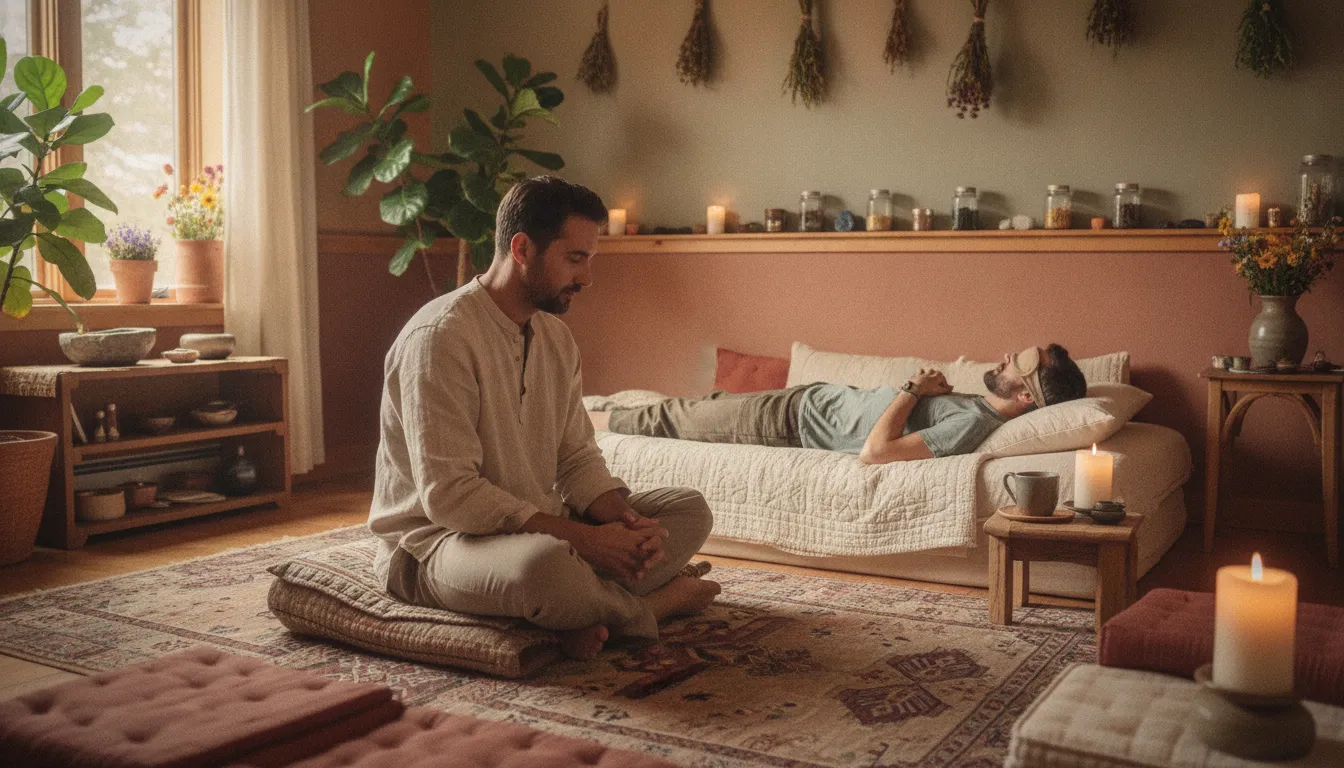
At Entheogyn, medical support is part of the safety container before, during, and after a licensed psilocybin session. Physician-supported care adds clinical judgment to screening and observation. Trained facilitators maintain a calm, respectful environment, communicate with the participant, and escalate concerns through the center's response plan.
Medical support is part of the safety container before, during, and after a licensed psilocybin session. In a physician-supported model, qualified professionals help assess whether participation is appropriate, remain connected to the care process, and provide clinical judgment suited to the participant's circumstances.
Entheogyn's Chief Medical Officer, Dana T. Lerman, MD, is a licensed natural medicine clinical facilitator through Colorado's Legacy Healer Pathway. A named medical professional does not make an experience automatically safe, but it can make clinical responsibility clearer. The relevant questions include who reviews health information, who can make a clinical determination, how concerns are escalated, and what support exists after a session. More background is available on the Entheogyn team.
The facilitator has a distinct role. The facilitator helps maintain a calm, respectful, attentive environment, reviews the plan, observes changes in comfort or behavior, and offers grounded support when communication is helpful. The medicine is the teacher and the client is the student. Facilitation should protect the integrity of that relationship rather than promise a particular emotional result or dictate what an experience must mean.
Set and setting are active safety measures
The physical space and emotional atmosphere can influence how a participant moves through a session. Soft light, clear expectations, professional presence, privacy, and a prepared room can help reduce avoidable distress. Research summaries from Johns Hopkins describe the importance of controlled settings and professional supervision. These measures reduce risk, but they do not guarantee that every moment will feel easy.
Human connection remains central
Technology and procedures can support safety, but they do not replace a present, responsive human being. A facilitator's calm attention can help a participant feel heard and less alone. That relationship should be professional and appropriately bounded, while still allowing warmth and compassion. Afterward, a participant can describe what occurred, ask questions, and consider next steps within the center's support process.
What Are the Contraindications for Psilocybin-Assisted Therapy?
Psilocybin-assisted therapy is not appropriate for everyone. Entheogyn's qualified screening team considers psychiatric history, physical health, current medicines, family history, and other clinical factors. Psychotic conditions and severe bipolar disorder require particular caution. A diagnosis or the absence of one cannot determine eligibility by itself.
Psilocybin-assisted therapy can involve intense changes in perception, emotion, and thought. Important concerns may involve psychiatric conditions, physical health, current medicines, and other circumstances that change the risks of an intense session. Eligibility cannot be determined from this article, an online quiz, or a single diagnosis. It requires a careful review by qualified clinicians who can consider the whole person and the proposed setting.
Psychotic conditions require particular caution
The National Center for Complementary and Integrative Health states that psilocybin is not safe for people with psychotic conditions such as schizophrenia, schizoaffective disorder, or severe bipolar disorder. This warning matters because a session can produce intense changes in perception, emotion, and thought. For someone with a relevant vulnerability, those effects may increase the risk of serious psychological harm.
A history of symptoms, prior episodes, current stability, and family or personal mental-health history may all matter during screening. A diagnosis alone does not provide enough information for a reader to decide whether care is suitable. Conversely, the absence of a diagnosis does not guarantee that a session is safe. A qualified review must consider context rather than rely on a simple checklist.
Health history and medicines also need review
Qualified clinicians should review relevant physical and mental-health factors before care begins. They should also discuss prescription medicines, over-the-counter products, supplements, and other health details that could affect the experience or the safety plan. The right questions vary by participant, so a general article cannot replace a personal clinical assessment.
Screening may result in additional evaluation, a referral to another provider, a request for more information, or a decision not to proceed. Those outcomes are part of responsible care, not a failure of the process. A safety-first center must be willing to decline participation when potential risks cannot be managed appropriately. This section is educational only, not individualized medical advice.
How Are Adverse Reactions Managed at Licensed Healing Centers?
Licensed healing centers manage adverse reactions through preparation, attentive observation, calm communication, physician-supported clinical judgment, and an established escalation plan. Entheogyn's team can assess a participant's physical and emotional state, involve medical support when needed, arrange further evaluation, and direct urgent concerns to emergency care.
A carefully prepared session can still involve physical or emotional discomfort. Safety does not mean every response is predictable or pleasant. It means the participant is in a setting where changes can be noticed, discussed, and addressed by an appropriately trained team.
What responses may occur?
Research on psilocybin-assisted psychotherapy reports elevated blood pressure, headache, nausea, vomiting, fatigue, and anxiety among common adverse events during or after sessions. The same review found that suicidal ideation and behavior were infrequent in the clinical trials examined and occurred mainly among participants with a prior history of suicidal ideation or attempts. These findings do not predict what will happen to an individual. Read the reported adverse-event findings for the study context.
Observation begins with calm communication
When a participant reports discomfort, the team can listen without judgment, acknowledge the experience, and help maintain a calm environment. The care team pays attention to physical changes, emotional intensity, and the participant's ability to communicate. Clear explanations and a steady human presence can help distinguish a temporary response from a concern that needs additional clinical attention.
Participants should share what they are feeling as directly as possible, including pain, nausea, fear, confusion, or a sense that something has changed physically. Concealing symptoms can make it harder for the team to respond appropriately. A licensed center should explain before the session how concerns are raised and who is responsible for clinical decisions.
When clinical escalation is needed
If a response appears outside the expected range, becomes more intense, or raises a medical or psychological concern, the team follows its established response plan. That may include involving the physician-supported care team, pausing or changing the session approach, arranging further evaluation, or directing the participant to a higher level of medical care. The appropriate action depends on symptoms, history, and qualified professional judgment.
After the session, relevant observations and actions should be documented as part of responsible care. Post-session support gives the participant an opportunity to describe lingering effects, ask questions, and understand appropriate follow-up. If symptoms persist or feel urgent after leaving a center, contact a qualified medical professional or emergency service rather than waiting for a routine appointment.
How Colorado's Regulatory Framework Protects Participants
Colorado's Natural Medicine Health Act establishes a state framework for regulated psilocybin services for adults 21 and older. Licensing, trained facilitators, preparation, screening, and professional oversight work together. At Entheogyn, these safeguards sit alongside Indigenous reciprocity and a clear reminder that Colorado authorization does not change federal Schedule I status.
Colorado's Proposition 122 created a state framework for natural medicine services, including regulated psilocybin sessions. The Colorado Department of Natural Medicine provides public information about the state's regulatory framework. The framework places participant safety, preparation, and professional oversight at the center of care. It does not make every setting or every provider appropriate for every person.
The geographic boundary matters. Services under this framework must occur in Colorado, and Entheogyn offers care within the state through a licensed, vertically integrated healing center. Colorado's approach also does not change federal law. The National Center for Complementary and Integrative Health notes that psilocybin remains listed as a Schedule I controlled substance at the federal level. State authorization and federal classification are separate legal realities.
| Safety layer | What it contributes |
|---|---|
| Screening | Reviews health history, mental-health factors, medicines, and suitability. |
| Preparation and setting | Creates clear expectations and a calm, controlled environment. |
| Trained facilitation | Supports attentive observation, communication, and participant dignity. |
| Medical oversight | Adds qualified clinical judgment when concerns require assessment or escalation. |
Within Colorado, safeguards include licensing requirements, participant screening, trained facilitators, and medical oversight. These controls work together. Training supports attentive facilitation, while physician-supported care provides a clinical layer for observation, communication, and escalation. Entheogyn's Colorado natural medicine regulations overview provides additional legal context.
Regulation also carries an ethical responsibility. Psilocybin knowledge has deep Indigenous origins, and a responsible Colorado provider should acknowledge the communities and traditions that have carried this knowledge. Entheogyn emphasizes Indigenous reciprocity alongside clinical excellence, treating cultural respect and contribution as part of responsible practice rather than a marketing detail. Its public benefit and ESG commitments offer further context.
What Should Someone Ask Before Choosing a Psilocybin Setting?
Before choosing a psilocybin setting, ask who reviews health information, how eligibility is determined, and who provides medical support. Ask how the room is prepared, what happens if a reaction becomes concerning, and what follow-up exists. Entheogyn encourages an honest conversation before a person decides whether Colorado-based care is appropriate.
Safety is easier to evaluate when a prospective participant asks direct questions rather than relying on broad promises. A responsible center should explain its screening process, the roles of the physician and facilitator, the session environment, consent practices, and the response plan for unexpected physical or emotional changes.
- Who makes the clinical determination? Ask who reviews health information and how the center handles uncertainty, missing records, or a request for further evaluation.
- How is the container prepared? Ask about the physical setting, privacy, expected duration, communication, music, and the preparation conversation before the journey.
- What happens when a participant feels unwell? Ask who observes the session, who can involve medical support, and what escalation steps are available.
- What happens afterward? Ask how observations are documented, how the participant can ask follow-up questions, and when further medical attention is recommended.
- Does the center acknowledge the medicine's origins? A serious provider should recognize Indigenous lineages and explain how reciprocity shapes its responsibilities.
These questions cannot remove uncertainty, and an online article cannot assess an individual's eligibility. They can help a person distinguish transparent, relationship-first care from a promise of guaranteed results. Entheogyn's model is grounded in science, reverence for the medicine, and honest boundaries.
Learn more about Entheogyn's Colorado psilocybin therapy and request a human connection call
Frequently Asked Questions
Is psilocybin therapy safe?
It can be conducted safely for appropriately screened participants in a controlled setting with professional supervision, but safety is a process rather than a guarantee. Medical screening, preparation, observation, communication, and post-session support all matter. Research summaries from Johns Hopkins describe a favorable safety profile under controlled conditions with professional supervision (Johns Hopkins Medicine).
Is psilocybin therapy safe for everyone?
No. Suitability depends on physical health, mental-health history, current medicines, and other clinical factors. The National Center for Complementary and Integrative Health cautions that psilocybin is not safe for people with psychotic conditions such as schizophrenia or schizoaffective disorder. Or with severe bipolar disorder (NCCIH). A qualified screening process is necessary before eligibility can be determined.
What side effects can occur during or after a session?
Possible physical responses include elevated blood pressure, headache, nausea, vomiting, and fatigue. Anxiety can also occur during or after a session. A clinical-trial review found that suicidal ideation and behavior were infrequent and occurred mainly among participants with a prior history of ideation or attempts (PubMed). Any concerning history should be discussed fully during screening.
What does medical screening do before psilocybin therapy?
Screening helps a care team evaluate health history, mental-health history, current medicines, contraindications, and informed consent. It is not a formality or a promise of acceptance. Depending on the information reviewed, a participant may be referred elsewhere or advised that the service is not appropriate. This process helps establish whether a supported Colorado session is a responsible option.
What should someone do if a reaction feels urgent?
Tell the care team immediately during a session so qualified professionals can assess the concern and follow the center's response plan. After leaving, contact a qualified medical professional or emergency service for urgent or persistent symptoms. An online article cannot assess an individual emergency, and no participant should wait for routine follow-up when immediate help is needed.
Ready to Learn More About Psilocybin Therapy?
Safety begins with an honest conversation about health history, questions, expectations, and whether this Colorado-based approach is appropriate. Entheogyn can explain its screening process, physician-supported care, preparation, and next steps before a person makes a decision.