
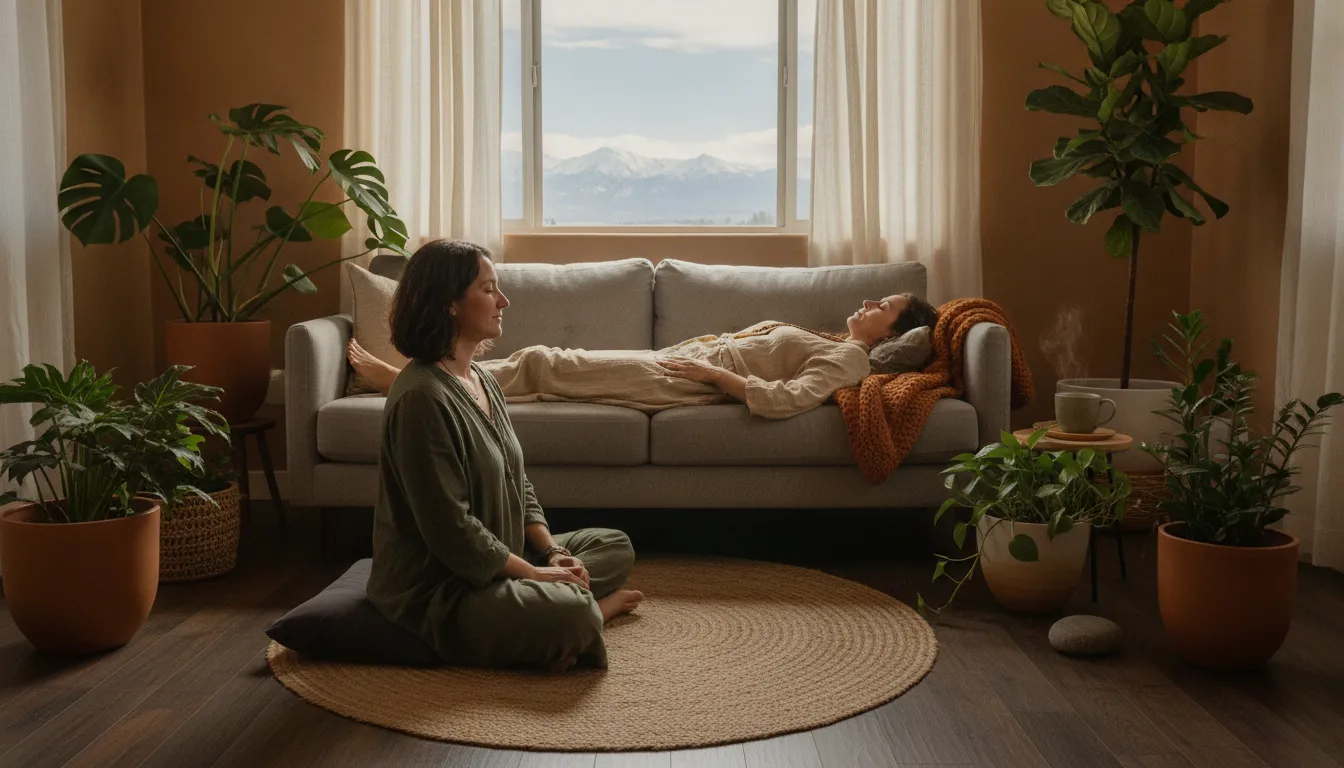
Depression can make change feel distant. This is true when standard approaches have not brought the lasting relief you hoped for. For many Colorado adults, the search for more meaningful care leads to a regulated natural medicine pathway: psilocybin therapy for depression. Offered inside licensed healing centers under the state's Natural Medicine Health Act, this work pairs emerging clinical research with a carefully held, human-centered container.
What makes this different is the way the experience is prepared and supported. You do not simply arrive and sit down. Care unfolds across three phases: preparation, the medicine journey, and integration, each designed to give you agency, safety, and time to make sense of what arises. The facilitators hold a calm and reliable setting, but they do not direct the experience. The medicine is approached with reverence as a teacher, and the client is the student.
Early research suggests psilocybin therapy for depression may produce rapid antidepressant effects for some people. With one randomized trial observing effects by day 2 and persistence on secondary measures beyond three months. This is emerging evidence, not a promise of a cure or an FDA-approved treatment, and meaningful care depends on screening, preparation, professional support, and integration.
Explore licensed psilocybin therapy for depression in Colorado
At Entheogyn, Colorado's first licensed, vertically integrated psilocybin healing center, the medicine is the teacher and the client is the student. Understanding how this work is prepared, what the evidence actually shows. And who is best suited for it can help you approach the possibility with both openness and discernment.
What Psilocybin Therapy for Depression Involves
In Colorado, psilocybin therapy for depression is a supervised, structured process offered through a licensed healing center. It is not a promise of a cure or a substitute for individualized medical care. Instead, it creates a carefully prepared setting in which an adult client can engage with psilocybin natural medicine while supported by trained facilitators. Entheogyn's approach is sacred, grounded, and professional: the medicine is the teacher. The client is the student, and the facilitator supports a safe container rather than directing the experience.
The process follows three connected phases: Preparation, Journey, and Integration. Each phase has a distinct purpose, and the work does not begin or end with the session itself. To learn more about the setting and process, visit our psilocybin therapy overview.
Preparation: creating a clear foundation
Preparation gives the client and facilitation team time to establish trust, review relevant health information, discuss intentions, and understand what the session may involve. This phase is also an opportunity to ask practical questions about the space, timing, support available, and the boundaries of the work. An intention is not a demand for a particular outcome. It is a steady point of reflection that can help a client approach the experience with honesty and openness.
Preparation also includes clarity about Colorado's regulated framework and session parameters. The state limits natural medicine consumption in a licensed healing center to 50 mg of psilocin per session. The amount selected for an individual session is determined within the applicable professional and safety framework, rather than chosen casually. Medicine cost is separate from session pricing, so clients should review those details before scheduling.
Journey: working with the medicine in a supported setting
During the Journey phase, the client works with the medicine in a calm, intentionally held environment. Facilitators remain present and attentive, helping maintain the container while respecting the client's inner process. They do not impose an interpretation or steer the experience toward a predetermined meaning. The focus is presence, safety, and allowing the client to notice what arises.
Research has reported rapid antidepressant effects after a single dose in some clinical settings. With effects observed by day two and persisting on certain outcomes for more than three months. A separate meta-analysis identified 25 mg as the most effective dose among the doses studied for major depressive disorder. These findings are promising but do not predict an identical result for every person or define the dose for a Colorado healing-center session. Read the clinical trial evidence and review the dose-response analysis.
Integration: making space for reflection
Integration follows the Journey and is non-directive. The client reflects on the experience and considers how its insights, emotions, or questions may relate to everyday life. Facilitators support that reflection without claiming authority over what the experience means. This ongoing attention can help keep the work connected to the client's intentions, relationships, and choices.
For background on the medicine itself, explore our guide to psilocybin mushrooms. A thoughtful process respects both the emerging science and the indigenous lineages and living traditions connected to this medicine.
The Clinical Evidence Behind Psilocybin for Depression
The research on psilocybin therapy for depression is growing, but it is not yet a finished story. Clinical studies are testing carefully measured doses alongside psychological support, structured preparation, and follow-up care. That design matters because the observed effects cannot be separated neatly from the therapeutic setting in which people engage with the medicine.
Several randomized trials have reported meaningful reductions in depressive symptoms. In one randomized clinical trial involving adults with major depressive disorder, a single dose was associated with antidepressant effects by day 2. Those effects persisted for more than three months on secondary outcome measures, according to the study report indexed by the National Library of Medicine. A rapid response is clinically interesting because many conventional depression treatments require weeks before their full effects can be evaluated. It does not mean that every person will respond quickly, or that one session replaces ongoing mental health care.
What randomized trials can and cannot show
Randomized controlled trials are valuable because they compare groups under predefined conditions and use validated depression measures. Recent work has included participants with major depressive disorder and treatment-resistant depression, and has examined a single 25 mg dose with psychological support and follow-up. For example, a randomized trial reported a greater reduction on the Montgomery-Asberg Depression Rating Scale in the psilocybin group at week 3. With the difference sustained at week 6. The study included 60 randomized participants and was designed to assess outcomes over six weeks. Its findings add to the evidence base, but one trial does not establish a universal result.
Other research urges caution. A large randomized clinical trial in adults with treatment-resistant depression found no statistically significant difference in six-week response rates among groups receiving 25 mg psilocybin. 5 mg psilocybin, or an active comparator. That result is important: encouraging findings coexist with studies that are less definitive. The field still needs larger, longer, well-controlled research that clarifies who benefits, how long benefits last, and how psilocybin compares with established depression care. See our guide to therapeutic psilocybin use for a broader explanation of the therapeutic context.
Why dose and context matter
Dose-response research does not support the idea that more medicine automatically produces better outcomes. A network meta-analysis identified 25 mg as the most effective dose among the doses compared for major depressive disorder. With a surface under the cumulative ranking curve value of 92.25%. The analysis is available through the National Library of Medicine. This finding describes a pattern across the included studies, not a universal prescription for an individual. Appropriate dosing depends on the regulated service, the participant's screening, and the clinical protocols in place.
These results support measured optimism rather than a promise of cure. Psilocybin remains an emerging therapeutic option, and outcomes can be influenced by mental health history, preparation, expectations, support, and integration after the session. For Colorado adults considering this path, the most responsible question is not whether psilocybin works for everyone. It is whether a licensed, carefully screened, ethically supported setting is appropriate for their circumstances and goals.
How Psilocybin Therapy Compares With Standard Depression Care
Psilocybin-assisted therapy and standard antidepressant care are not interchangeable paths. They differ in how treatment is delivered, how often a person engages with the medicine or medication. And how much of the process takes place inside a therapeutic setting. Comparing those dimensions can help Colorado adults ask better questions without treating emerging research as a guarantee.
Clinical research has found that a single dose of psilocybin may produce rapid antidepressant effects. With effects observed by day 2 and persisting for more than three months on secondary outcomes in one randomized trial of major depressive disorder. A separate network meta-analysis identified 25 mg as the most effective dose among the regimens it examined. These findings are promising, but they do not make psilocybin an FDA-approved depression treatment or establish that it will work for every person.
| Dimension | Psilocybin-assisted therapy | Standard antidepressant care |
|---|---|---|
| Onset of effect | Research suggests effects may emerge quickly after a supervised session. One trial observed antidepressant effects by day 2, while the duration and clinical meaning of response can vary. | Response commonly develops over repeated daily dosing, often assessed over several weeks. Timing varies by medication, dose, and individual response. |
| Dosing | Typically involves a planned, session-based dose within a structured therapeutic container, rather than unsupervised repeated dosing. The appropriate amount is determined within the licensed service. | Usually involves taking a prescribed medication on a regular schedule, commonly daily, with adjustments made by a qualified medical professional when appropriate. |
| Therapeutic setting | The person sits with the medicine during a supervised experience supported by trained facilitators. Preparation, the session, and integration are part of the broader care container. | Care may include medication management, psychotherapy, or both. The medication is generally taken outside the clinician's office, according to the prescribed plan. |
| Evidence status | An emerging area of research with encouraging findings for depression, but not an FDA-approved treatment. Results from studies should be discussed with appropriate clinical caution. | A well-established category of medical treatment with multiple FDA-approved antidepressant options, clinical guidelines, and a larger body of long-term use data. |
| Colorado access | Colorado permits supervised psilocybin use through licensed healing centers under the Natural Medicine Health Act. It is a regulated therapeutic service, not general retail access. | Prescription antidepressants are accessed through conventional medical care, such as a licensed prescriber and pharmacy, subject to the medication's prescribing requirements. |
The practical distinction is the therapeutic container. Psilocybin-assisted therapy is not simply a faster prescription or a replacement for ongoing mental health care. It is an emerging, regulated service that combines preparation, supervised engagement with the medicine, and integration. Standard depression care may remain the better fit for some people, while others may want to discuss whether a licensed Colorado setting is appropriate for them. Any decision should account for personal history, current medications, safety considerations, and the level of support needed.
For a grounded overview of the process and eligibility questions, explore psilocybin therapy in Colorado.
What Colorado Research and the Natural Medicine Health Act Mean for Access
Access to supervised psilocybin services depends on where you live. The legal framework and the setting matter too. For adults exploring psilocybin therapy for depression, Colorado offers a regulated pathway that is distinct from both informal use and conventional medical treatment.
Under the Natural Medicine Health Act, established through Proposition 122, Colorado allows the supervised use of psilocybin in licensed healing centers. The Colorado Department of Public Health and Environment identifies licensed healing centers as the only places where supervised use of natural medicines such as psilocybin can occur. Read the Colorado Department of Public Health and Environment's overview of the Natural Medicine Health Act for the state's current framework and requirements.
What the Colorado framework does and does not mean
This framework creates a Colorado-specific option for adults who are at least 21 years old. It does not make supervised psilocybin services available throughout the United States, and it does not change federal law. Someone considering this work should confirm that they are physically present in Colorado and eligible to participate through a licensed healing center.
The framework also does not turn psilocybin into an FDA-approved treatment for depression. A regulated healing-center service is not the same thing as a prescription, a hospital-based treatment, or a clinical trial. Emerging research has shown potential for psilocybin in depression. But research findings should not be presented as a promise of a cure or a guarantee of benefit for any individual.
In Colorado's regulated setting, trained facilitators support the container for supervised work with the medicine. Their role includes helping establish appropriate conditions, supporting safety during the session, and honoring the participant's process. This is different from receiving unsupervised advice online or attempting to recreate a clinical or ceremonial setting without qualified support.
A licensed setting supports informed choice
A licensed healing center should be transparent about what it provides, what it does not provide, and how preparation, the session, and follow-up support fit together. Prospective participants can ask about eligibility, facilitator training, screening, safety procedures, integration support, privacy, and total costs before deciding whether the service is appropriate. They should also understand that a healing-center experience does not replace urgent mental health care or ongoing support from a qualified medical professional when that care is needed.
Entheogyn is Colorado's first licensed, vertically integrated healing center operating under this framework. Its approach places the regulated service within a grounded therapeutic container, while keeping the limits of the law and the current evidence clear. Explore Entheogyn's psilocybin therapy services to learn how the center approaches access, preparation, and supported participation in Colorado.
What a Licensed Psilocybin Therapy Session Looks Like
A licensed session is carefully structured without being rigid. The setting, pace, and support are designed to help you engage with the medicine safely and attentively, while leaving room for an experience that cannot be scripted. At Entheogyn, the therapeutic arc moves through three distinct phases: Preparation, Journey, and Integration. Each phase has a different purpose, and each depends on honest communication between the client and the trained facilitator.
Preparation: Establishing set, setting, and trust
Preparation begins before the medicine is present. You and the facilitation team discuss your intentions, relevant health history, expectations, and any concerns you want to name. This is also a time to clarify what the session can and cannot offer. Licensed psilocybin therapy is not presented as a guaranteed cure, and no facilitator can promise a particular emotional outcome.
The physical environment matters as much as the conversation. A calm, private setting can reduce unnecessary stimulation and help you feel oriented. This is often described as attention to set, your mindset and emotional readiness, and setting, the surroundings and relationships that hold the experience. The facilitator's role is to support a safe container through presence, preparation, and careful observation. They do not dictate what you should feel or tell you what the experience means.
Before the session begins, the team also reviews practical details, including pacing, consent, communication, and aftercare. Colorado's licensed framework limits natural medicine consumption in a healing center to 50 mg of psilocin per session. Medicine cost is separate from session pricing, so ask for a clear breakdown of both before scheduling.
Journey: Remaining present with the medicine
During the journey, you may rest, listen to music, notice bodily sensations, or move through changing thoughts and emotions. The facilitator remains available and attentive, offering reassurance or practical support when needed. Their presence is steady rather than directive. They do not lead you toward a predetermined insight, interrupt the process to analyze it, or impose an interpretation on what arises.
This approach reflects a central principle of the work: the medicine is the teacher, and the client is the student. A difficult moment is not automatically a failure, and a powerful moment does not need to be turned into an instant conclusion. You are encouraged to meet the experience with curiosity and care, while the facilitator helps maintain physical and emotional safety.
Integration: Carrying the experience into daily life
Integration follows the journey and gives you space to reflect on what you noticed. It is non-directive and self-directed. Rather than interpreting your experience for you, the facilitator may ask open questions. Help you identify themes you want to explore, and support practical next steps that are your own. The aim is not to produce a polished explanation immediately, but to help you develop a grounded relationship with what you experienced.
Some people continue reflecting through journaling, quiet time, therapy, or supportive conversations. Integration can unfold gradually, and a single session does not replace ongoing mental health care when that care is appropriate. To learn more about the service and what to expect, visit psilocybin therapy at Entheogyn.
Is Psilocybin Therapy Safe? Risks and Side Effects
Safety begins before a person sits with psilocybin. A responsible Colorado healing center does not treat the experience as something to pursue casually or as a guaranteed answer to depression. Screening, informed consent, preparation, and carefully supported sessions help create the conditions for a meaningful and appropriately bounded experience.
Clinical research offers a balanced picture. In one randomized clinical trial involving major depressive disorder, most treatment-emergent adverse events were transient and mild to moderate. The trial reported no drug-related serious adverse events. At the same time, two participants in the psilocybin group experienced persistent, severe anxiety that required medical attention. These findings support neither alarm nor overconfidence. They show why emotional support, medical awareness, and follow-up care matter. Read the published trial findings.
Possible short-term effects
During or after a session, some people may experience anxiety, fear, confusion, emotional intensity, changes in perception, nausea, fatigue, or difficulty settling back into ordinary routines. The experience can also bring forward memories or feelings that require time and care to process. Even when these effects are temporary, they can feel substantial in the moment.
A trained facilitator does not promise to control every part of the journey. Instead, the facilitator supports a calm, respectful container, observes for signs that additional assistance may be needed, and helps the participant remain oriented to the agreed safety plan. The medicine is approached with respect, while the client remains an active participant in the process.
Why screening and preparation matter
Before participation, screening should address mental and physical health history, current symptoms, medications, substance use, prior experiences with natural medicine, and practical support after the session. A qualified provider can explain whether the setting is appropriate and when consultation with another healthcare professional is needed. People should share complete and accurate information rather than withholding details to qualify.
Preparation also includes discussing intentions, boundaries, consent, transportation, emergency procedures, and what to expect from the setting. Participants should understand that psilocybin therapy in Colorado is a regulated service in licensed healing centers, not an FDA-approved treatment or a promise of a cure. Colorado access is limited to adults who meet the applicable requirements, and supervised natural medicine services should take place only within the licensed setting.
Support after the session
Safety does not end when the session concludes. Integration and follow-up give participants space to notice changes, discuss difficult emotions, and identify additional mental health support if needed. Persistent or severe anxiety, worsening depression, thoughts of self-harm, or other concerning symptoms warrant prompt professional attention. A healing center should make clear how to ask for help and when outside medical or crisis care is appropriate.
For anyone considering psilocybin therapy for depression, the quality of the container matters as much as the promise of the experience. Choose a licensed Colorado healing center that is transparent about screening, facilitator training, preparation, integration, limitations, and referrals. That grounded approach respects both the potential of the medicine and the responsibility involved in working with it.
Who Is a Good Candidate for Psilocybin Therapy in Colorado
A good candidate for psilocybin therapy in Colorado is an adult age 21 or older. The right fit is someone thoughtfully exploring a structured, supervised therapeutic option for depression. This service may be relevant for someone who wants to engage with a regulated natural medicine setting alongside an existing depression-care plan. Rather than treating a ceremony as a replacement for ongoing medical support.
Eligibility is not determined by a single diagnosis, personal story, or desire for a particular outcome. Entheogyn uses a screening process and physician-led medical support to understand each person's health history, goals, current care, and readiness for the preparation, journey, and integration phases. Clinical support helps establish whether the setting is appropriate for the individual. It also gives prospective clients space to ask informed questions before deciding whether to proceed.
Some people who inquire are veterans or first responders seeking a carefully held approach to depression, trauma-related experiences, or the emotional weight of demanding service. Others are experienced seekers who have spent time reflecting on personal growth and want to approach the medicine with humility, preparation, and realistic expectations. In either case, curiosity alone is not the same as readiness. A respectful relationship with the process, willingness to participate in preparation and integration, and openness to professional screening all matter.
Entheogyn's model is supportive rather than directive. Facilitators help maintain a safe and attentive container, while the medicine is approached with reverence and the client's experience is treated as personal. Integration is non-directive, which means the team does not impose an interpretation or promise a prescribed emotional result. The intention is to support reflection and care within a licensed Colorado healing-center framework.
Psilocybin therapy is a regulated therapeutic service, not a cure for depression. Anyone considering it should continue coordinating depression care with their existing healthcare professionals and should not stop or change prescribed treatment without medical guidance. Screening is where individual questions about suitability, timing, and clinical support belong. If you are also interested in learning how facilitators are prepared to hold this kind of setting, Entheogyn's facilitator training program offers additional context about the care philosophy.
Explore psilocybin therapy for depression at Entheogyn
Frequently Asked Questions
Is psilocybin therapy effective for depression?
Early clinical research suggests that psilocybin, provided within a structured therapeutic setting, may help reduce depressive symptoms for some people. One randomized clinical trial reported rapid antidepressant effects by day 2, with effects on secondary outcomes persisting for more than three months. But this does not establish a cure or guarantee an outcome for every client (PubMed).
How does psilocybin therapy work for mental health?
Care typically unfolds across preparation, the medicine journey, and integration. Preparation establishes intentions, expectations, and safety planning. During the journey, trained facilitators support a calm container without directing or interpreting the experience. Integration is non-directive, giving you space to reflect on what arose and decide how it may inform your life.
What is the legal status of psilocybin in Colorado?
Colorado permits supervised psilocybin use under the Natural Medicine Health Act, also known as Proposition 122. Supervised use may occur only through licensed healing centers, within the state's regulated framework. This service is for adults age 21 and older and should not be confused with an FDA-approved treatment or a clinical trial (Colorado Department of Public Health and Environment).
What are the risks and side effects of psilocybin therapy?
Possible effects include temporary anxiety, emotional intensity, changes in perception, and physical discomfort. Clinical evidence indicates that most reported adverse events were mild to moderate and transient, although two participants in one trial experienced persistent severe anxiety requiring medical attention (PubMed). A careful screening and preparation process helps determine whether this setting is appropriate for you.
Ready to Explore Your Next Step?
For Colorado adults considering licensed psilocybin therapy for depression, a consultation offers a thoughtful first step. It is space to discuss your intentions, your history with depression care, the questions you are carrying. And whether this approach fits where you are in your life right now.
You can also learn how preparation and integration are structured, what screening involves. What the licensed healing center setting looks like, and how the medicine cost is separate from the therapy itself. There is no pressure and no obligation to move forward, only a conversation grounded in care, transparency, and respect for your own timing.
Schedule a consultation with Entheogyn, or request more about psilocybin therapy for depression in Colorado.