
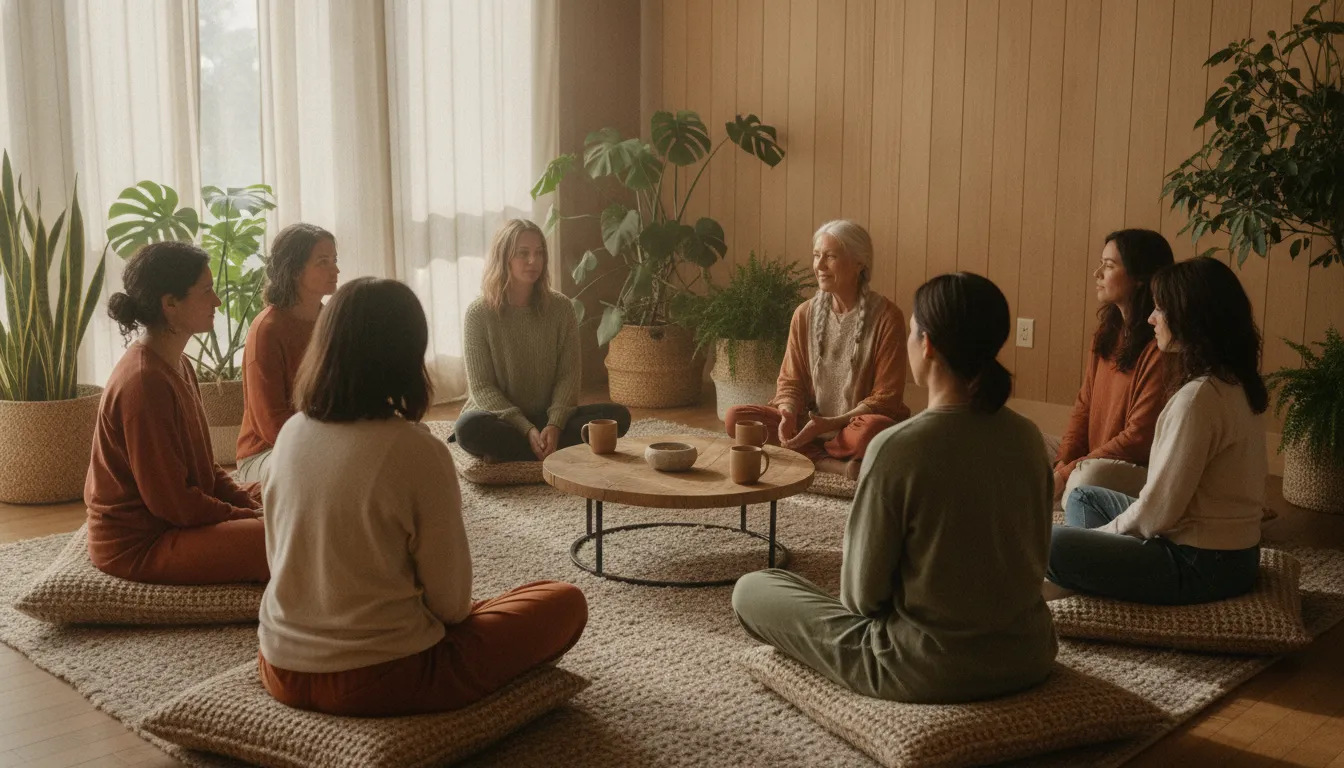
What is a psilocybin facilitator Colorado? A licensed professional who supports adults through a regulated psilocybin session in a Colorado healing center. The facilitator helps create a safe, intentional container, remains present during the journey, and respects the client's relationship with the medicine. This cluster article complements Entheogyn's Colorado natural medicine regulation and psilocybin therapy explanation.
Learn about Colorado psilocybin therapy at Entheogyn
A psilocybin facilitator in Colorado is a professional licensed through the Colorado Department of Regulatory Agencies (DORA) to support regulated psilocybin sessions for adults 21 and older. Facilitators prepare the setting, attend to safety, and remain present without imposing meaning on the client's experience. Services belong within a licensed natural medicine healing center, and federal restrictions remain unchanged.
The title carries an important distinction. A facilitator is not simply someone with personal experience, a wellness title, or a short course certificate. Colorado connects facilitation to state licensing, approved education, supervised experience, professional boundaries, and a licensed setting. The medicine is the teacher, while the client remains the student of the experience.
What Is a Psilocybin Facilitator in Colorado?
A psilocybin facilitator in Colorado prepares the setting, confirms consent, supports safety during a regulated session, and remains attentive through closing and integration. The role is not to prescribe an interpretation or promise an outcome. It is to hold an ethical container where an adult client can engage with the medicine with clarity and dignity.
A licensed psilocybin facilitator supports the conditions around a natural medicine session. That work begins before the journey and continues through appropriate closing and integration support. The facilitator does not promise a specific result or decide what a memory, emotion, image, or sensation means. Their responsibility is to help hold a clear, ethical, and responsive container.
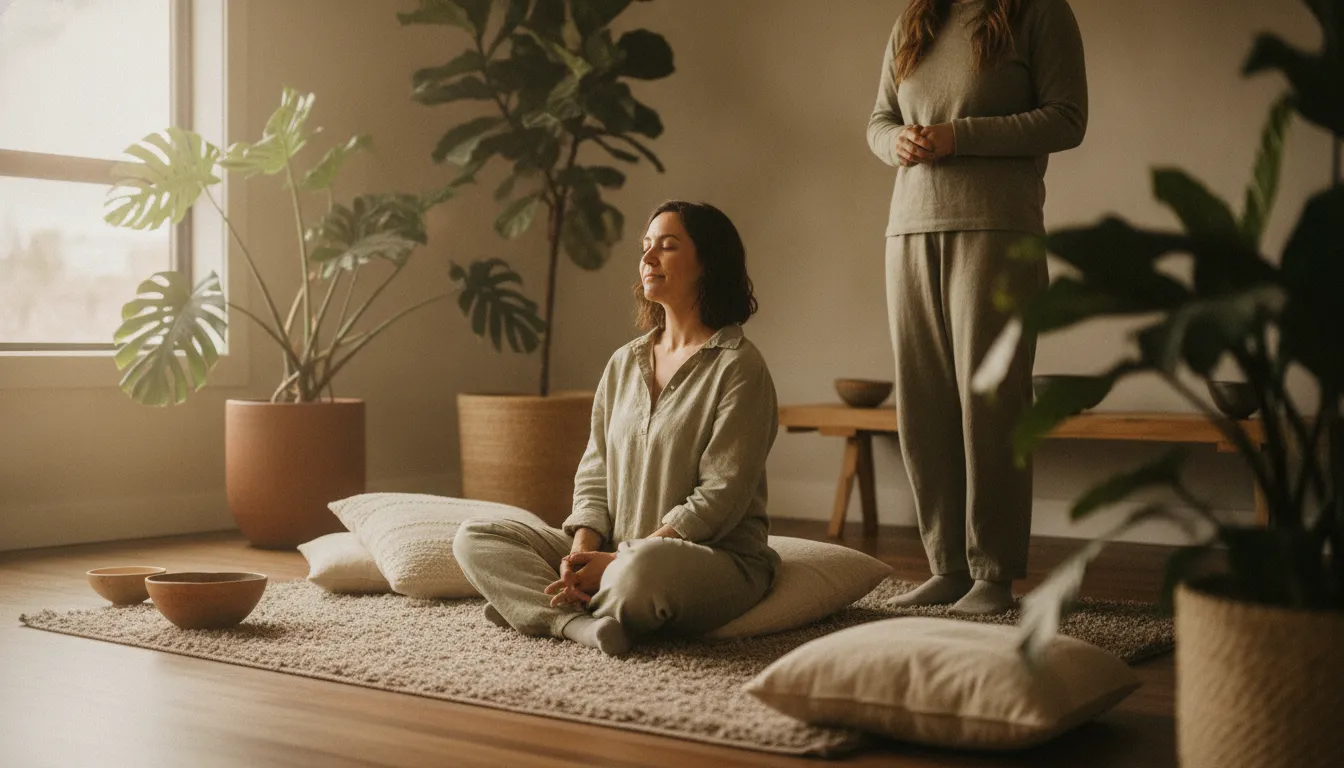
Preparation establishes the container
Preparation can include discussing the session structure, clarifying consent, reviewing practical expectations, and identifying how the client can communicate needs. It also creates room for honest questions about the environment and the facilitator's role. Preparation is not a promise that the session will feel easy. It gives the client a grounded understanding of the setting and the boundaries that support the work.
Set and setting matter throughout. Set includes a person's mindset, expectations, and emotional readiness. Setting includes the room, the people present, the pace, the sensory environment, and the quality of attention. A facilitator tends to these details so the space is calm, private, and appropriate for the session. In Colorado's regulated model, the service belongs within a licensed Regulated Natural Medicine healing center rather than an informal at-home arrangement.
Presence supports safety without directing meaning
During a session, the facilitator remains attentive to the client's physical and emotional comfort. They respond to requests, help preserve a stable environment, and offer grounding support when invited. They may reflect a client's own words or clarify what is happening in the room. They should not steer the client toward an interpretation, spiritual explanation, or outcome that reflects the facilitator's personal beliefs.
This boundary requires more than quiet observation. It calls for careful listening, clear consent, awareness of scope, and the ability to recognize when a concern needs additional professional attention. A facilitator can support reflection after the journey without turning integration into a diagnosis or a guarantee of symptom relief. For a broader view of preparation, session support, and integration, read Entheogyn's guide to therapeutic psilocybin.
How Is a Facilitator Different from a Therapist or Counselor?
A psilocybin facilitator in Colorado supports a regulated session under the state's natural medicine framework. A therapist or counselor provides mental-health care under a separate professional license, which may include psychotherapy, assessment, or treatment planning. One credential does not automatically confer the other's scope, even when one professional holds both types of authorization.
A psilocybin facilitator and a therapist or counselor may have complementary roles, but the credentials are not interchangeable. A facilitator supports a regulated psilocybin session within Colorado's natural medicine framework. A therapist or counselor provides mental-health care within the boundaries of a separate professional license. That care may include psychotherapy, assessment, treatment planning, or coordination with other providers, depending on the person's credentials.
The facilitator's role is session-specific
A facilitator helps a client prepare for the environment, remain connected to a sense of safety during the journey, and reflect on what arose afterward. The facilitator does not tell the client what an experience means. The medicine is the teacher, and the client remains the student. This stance honors the client's own knowledge while keeping the facilitator accountable to consent, safety, and professional limits.
Some facilitators may also hold a mental-health license. That additional credential is separate from facilitator authorization, however. A prospective client should ask which license the professional holds, what services fall within that license, and how referrals are handled when a need extends beyond the session container.
A therapist brings a different clinical scope
A therapist or counselor may provide ongoing psychotherapy and mental-health support before or after a natural medicine session. That relationship can coexist with facilitation, but one role does not automatically confer the authority of the other. A careful provider explains the distinction plainly rather than presenting every form of support as clinical treatment.
Colorado's state framework also does not change federal law. Psilocybin remains federally classified as a Schedule I substance. This article describes Colorado's regulated state pathway, not federal authorization or a medical cure. Adults considering care should ask about eligibility, safety screening, the setting, professional credentials, and appropriate follow-up support.
What Licensing Does Colorado Require for Facilitators?
A psilocybin facilitator in Colorado is licensed through the Department of Regulatory Agencies, or DORA. The Department of Revenue separately regulates natural medicine businesses and healing centers. The facilitator's personal credential therefore works within a broader licensed setting. Clients should verify both the professional's credential and the center's authorization before a session.
Colorado treats facilitation as a regulated professional responsibility. The Colorado Department of Regulatory Agencies, or DORA, licenses and regulates natural medicine facilitators. The Department of Revenue regulates natural medicine businesses, including healing centers. This division means that the person providing facilitation and the business providing the setting have related but distinct obligations.
DORA licenses people, while DOR regulates businesses
A facilitator license does not by itself create permission to operate an independent private practice or arrange regulated sessions in a client's home. The session belongs within a licensed healing center. The center's business license, procedures, records, and physical environment form part of the accountable container around the work.
Colorado's licensing information distinguishes among several professional pathways. A standard Facilitator license supports the regulated facilitation role. A Clinical Facilitator pathway applies to qualifying professionals who already hold an eligible Colorado clinical license. A Training License supports supervised professional development while an applicant completes the applicable requirements. These labels are not interchangeable, so clients and prospective students should confirm the exact credential.
What should a client or student verify?
- Whether the facilitator holds the applicable Colorado credential.
- Whether the session occurs at a licensed Regulated Natural Medicine healing center.
- Whether the organization has the business and facility approvals required for its work.
- What preparation, safety, consent, and integration procedures are in place.
- Which concerns fall outside the facilitator's scope and require referral.
Colorado's Natural Medicine FAQ from the Division of Professions and Occupations identifies DORA-certified training as part of the facilitator licensure pathway. The Natural Medicine Division FAQ explains the separate business and healing-center oversight administered by the Department of Revenue.
What Training Do Colorado Facilitators Complete?
A psilocybin facilitator in Colorado completes a DORA-certified training program with didactic instruction, supervised practicum, consultation, Basic Life Support certification, and the state licensing process. The commonly cited training structure totals 230 hours: 150 hours of instruction, 40 hours of practicum, and 40 hours of consultation. Training completion alone is not the final license.
Colorado requires an applicant to complete a facilitator training program certified by DORA. The education pathway combines instruction, practicum, and consultation. It is more substantial than a brief workshop, and completion of a training program is not identical to receiving the final state license.
The 230-hour training structure
DORA's FAQ describes minimum coursework of 150 hours, alongside 40 hours of supervised practicum and 40 hours of consultation. The three components serve different purposes:
- Didactic instruction, 150 hours. Students build a foundation in facilitator best practices, ethics, Colorado rules, consent, and boundaries. The curriculum also addresses physical and mental health, contraindications, trauma-informed care, screening, preparation, administration, integration, group facilitation, cultural considerations, and facilitator self-care.
- Supervised practicum, 40 hours. Students translate classroom learning into attentive presence, careful communication, safety awareness, and respect for the client's experience under appropriate supervision.
- Consultation, 40 hours. Consultation gives developing professionals structured access to experienced perspective. It creates space to examine boundaries, challenging situations, scope questions, and the responsibilities of work in a regulated healing setting.
Applicants must also maintain active Basic Life Support certification. That requirement reflects the practical responsibility of being present with a client during a session. Training, certification, and licensure work together, but none should be presented as permission to provide services outside the regulated Colorado setting.
Training and licensure are separate steps
A prospective facilitator should ask whether a program is certified by DORA, how it structures practicum and consultation, and how it explains the application process. It is also worth asking how the curriculum approaches Indigenous, social, and cultural considerations. Colorado's framework should not be presented as a Western discovery detached from the elders, lineages, and communities that carried knowledge of sacred mushrooms across generations.
Entheogyn's Colorado facilitator training program is a relevant starting point for readers exploring the educational pathway. The program should be evaluated alongside current DORA requirements, since licensing rules and approved-program information can change.
Can a Psilocybin Facilitator Practice Independently?
A psilocybin facilitator in Colorado works within a licensed Regulated Natural Medicine healing center. The facilitator's personal license does not make an unlicensed home, hotel room, or private practice an equivalent venue. The center, its procedures, and the facilitator's credential together establish the accountable legal and safety container.
Under Colorado's regulated natural medicine framework, facilitation services belong within a licensed Regulated Natural Medicine healing center. A facilitator is not a stand-alone provider who arranges an equivalent service in a private residence, hotel room, or other unlicensed location. The healing center is part of the legal and safety container, alongside the facilitator's own professional responsibilities.
Why the licensed setting matters
A licensed center provides a defined venue for preparation, administration, observation, and closing support. It also creates accountability beyond the individual relationship between facilitator and client. DORA oversees facilitator licensing, while the Department of Revenue oversees natural medicine businesses. Both sides matter when a client or student evaluates a provider.
The regulated environment does not have to feel cold or impersonal. A well-held center can be warm, quiet, and responsive to the person in front of the facilitator. Structure clarifies who is responsible for the setting, what procedures apply, and where the session belongs. It also helps the facilitator honor the pace and duration required for the session rather than treating the work as an informal appointment.
| Consideration | Licensed healing-center work | Unlicensed or at-home arrangement |
|---|---|---|
| Venue | Session occurs within a licensed Regulated Natural Medicine healing center. | Session occurs outside the licensed-center framework. |
| Oversight | DORA oversees facilitators and DOR oversees the business. | No comparable licensed-center accountability applies. |
| Professional container | Roles, consent, procedures, and setting are defined before the session. | Responsibilities may not be established through Colorado's regulated program. |
| Client questions | Clients can ask about credentials, facility licensing, screening, and referrals. | Credentials and safeguards may be harder to verify. |
So, can a psilocybin facilitator practice independently? Not as a substitute for the licensed healing-center setting required by Colorado's regulated model. Anyone comparing providers should ask where sessions occur, which entity holds the relevant business license, what credential the facilitator holds, and how the center handles safety and follow-up. For the wider regulatory context, revisit Entheogyn's Colorado natural medicine regulation guide.
Explore facilitator training at Entheogyn
Frequently Asked Questions
What is a psilocybin facilitator in Colorado?
A psilocybin facilitator is a professional licensed through DORA to support adults during a regulated psilocybin session. The facilitator prepares the setting, attends to safety, and remains present without imposing meaning on the client's experience. Colorado's pathway applies to adults 21 and older, and the session belongs within a licensed natural medicine healing center.
Are psilocybin facilitators medical doctors?
Not necessarily. A facilitator license is distinct from a medical degree and does not automatically authorize diagnosis or conventional medical care. Some Clinical Facilitators hold eligible Colorado clinical licenses, but clients should ask about a professional's exact credentials and scope rather than infer them from the word facilitator.
How do I become a licensed psilocybin facilitator in Colorado?
An applicant must complete a DORA-certified facilitator training program and satisfy the requirements for the applicable license pathway. The training structure includes at least 150 hours of didactic instruction, 40 hours of supervised practicum, and 40 hours of consultation. Applicants must also maintain Basic Life Support certification and complete the state licensing process.
Can a facilitator provide a session at my home?
Colorado's regulated natural medicine model places facilitation services within a licensed Regulated Natural Medicine healing center. A private home arrangement is not an equivalent substitute for that licensed setting. Ask the provider where the session occurs, which business holds the facility license, and how the service aligns with current DORA and Department of Revenue requirements.
Does Colorado legalization change federal psilocybin law?
No. Colorado's state-level framework does not change psilocybin's federal Schedule I status. This article describes the regulated Colorado pathway only. Readers should seek current information from state agencies and qualified professionals when assessing legal, safety, or mental-health questions.