
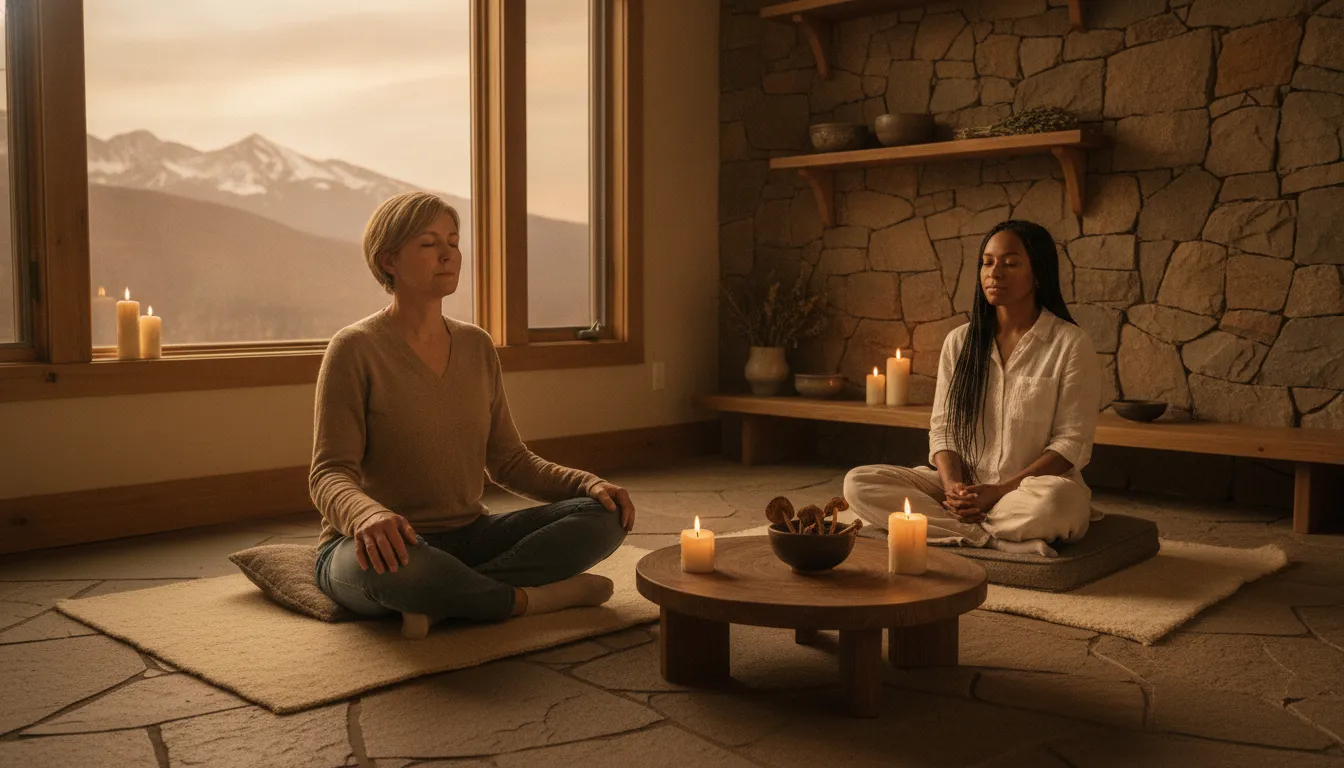
For people searching for psilocybin therapy for PTSD veterans Colorado, the practical answer is a regulated, supervised natural medicine pathway for eligible adults 21 and older, not a guaranteed cure or a replacement for veteran health care. Colorado's licensed healing-center model creates a structured container for screening, preparation, a supported journey, and integration. This article explains what the emerging evidence says, what Colorado's program actually offers, and what a veteran should ask before considering a session. For broader context on condition-specific research and clinical practice, see Entheogyn's Colorado mental-health research overview.
Explore Entheogyn's licensed psilocybin therapy in Colorado
Short answer: Psilocybin therapy for PTSD remains an emerging area of research, with a small 2026 veteran pilot reporting encouraging preliminary outcomes. Colorado's Natural Medicine Health Act creates a state-regulated setting for adults 21 and older, but a licensed service is not the same as a VA program, clinical trial, or FDA-approved PTSD treatment. Screening, preparation, consent, medical oversight, and integration are central.
What Is PTSD and Why Do Some Veterans Seek Another Path?
Post-traumatic stress disorder can affect sleep, mood, relationships, attention, physical arousal, and a person's sense of safety. Veterans may carry trauma from combat, military sexual trauma, accidents, disaster response, moral injury, or repeated exposure to threat. The effects can remain present long after service ends, even when someone has already worked hard with established care.
Many veterans first encounter this topic after standard options have not brought enough relief, have created difficult side effects, or have not matched the kind of healing they are seeking. That search deserves respect, but it also needs clear boundaries. Psilocybin is not a shortcut around trauma, and a powerful experience is not automatically a therapeutic one. The container around the experience matters.
The U.S. Department of Veterans Affairs National Center for PTSD describes psilocybin-assisted therapy for PTSD as an area with growing interest but limited veteran-specific evidence. Its overview also distinguishes research settings from ordinary clinical care. A veteran considering a Colorado service should keep that distinction in view and maintain an honest conversation with the clinicians already involved in their care.
Colorado's pathway is relevant because it offers a state-regulated setting for natural medicine services. It does not create federal approval, erase federal restrictions, or establish psilocybin as an FDA-approved PTSD treatment. It also does not make every healing center identical. Licensure, screening practices, facilitator credentials, medical support, consent protocols, and integration offerings should all be examined directly.
What Does Emerging Research Show About Psilocybin and PTSD?
Research on psilocybin and PTSD is promising but early. A July 2026 open-label pilot in Communications Medicine enrolled 12 U.S. military veterans with severe, treatment-resistant PTSD. Participants received psychotherapy around two psilocybin sessions, and the investigators reported substantial symptom improvement at one-month follow-up. The study was small, open-label, and conducted outside Colorado, so its findings cannot establish what will happen for an individual veteran.
The study reported no serious adverse events during the trial. Non-serious events included headache, anxiety, and dizziness. It also reported a 75 percent response and remission figure at follow-up. Those results are important to study, not a promise to repeat. A small sample, the absence of a control group, participant selection, expectancy, and the specialized research environment all limit how broadly the findings can be applied.
Read the 2026 veteran pilot in Communications Medicine and review its methods, eligibility criteria, and limitations. For a broader introduction to the evidence and the history of psilocybin research, see Entheogyn's overview of psilocybin and PTSD. That broader article is not a substitute for individualized medical advice, but it can provide useful context before a consultation.
Evidence from depression, anxiety, or other conditions should not be presented as proof for PTSD. Different conditions, protocols, populations, and outcomes matter. The most responsible conclusion today is that psilocybin-assisted therapy for PTSD warrants careful research and careful screening. It does not support a claim that psilocybin heals every veteran, removes trauma, or guarantees lasting symptom relief.
| Question | What the current evidence supports | What it does not establish |
|---|---|---|
| Is veteran PTSD research available? | Yes. A small 2026 open-label pilot reported preliminary outcomes. | It does not establish a standard of care or a guaranteed result. |
| Does Colorado access equal a clinical trial? | No. A licensed healing center provides regulated natural medicine services. | It is not the same as a controlled research study or VA program. |
| Does a session replace ongoing care? | No. Veterans should coordinate decisions with their existing health team. | It should not replace crisis support, medication oversight, or established care. |
How Does Colorado's Licensed Natural Medicine Program Support Veterans?
Colorado's Natural Medicine Health Act established a state framework for licensed healing centers and natural medicine facilitators. A healing center is a licensed setting where a facilitator may provide and supervise natural medicine services for a participant. The Colorado Natural Medicine Division and the Colorado Natural Medicine Program publish information about the business and professional sides of that framework.
Colorado's model is built around supervised administration rather than an informal retail transaction. The service occurs in a defined setting with consent, screening, preparation, and professional responsibility. The Colorado Division of Professions and Occupations oversees facilitator licensing and continuing education requirements, while the Natural Medicine Division oversees business licensing. Veterans can review the state framework through the Colorado Natural Medicine Program and the state's healing-center information.
At Entheogyn, Colorado's first licensed, vertically integrated psilocybin healing center and a Public Benefit Corporation, the service model follows three connected phases. The point is not to force a particular emotional outcome. It is to create a grounded environment where a participant can approach the medicine with preparation, agency, and respect.
- Preparation: The participant's intentions, history, questions, set, and setting are explored before the journey.
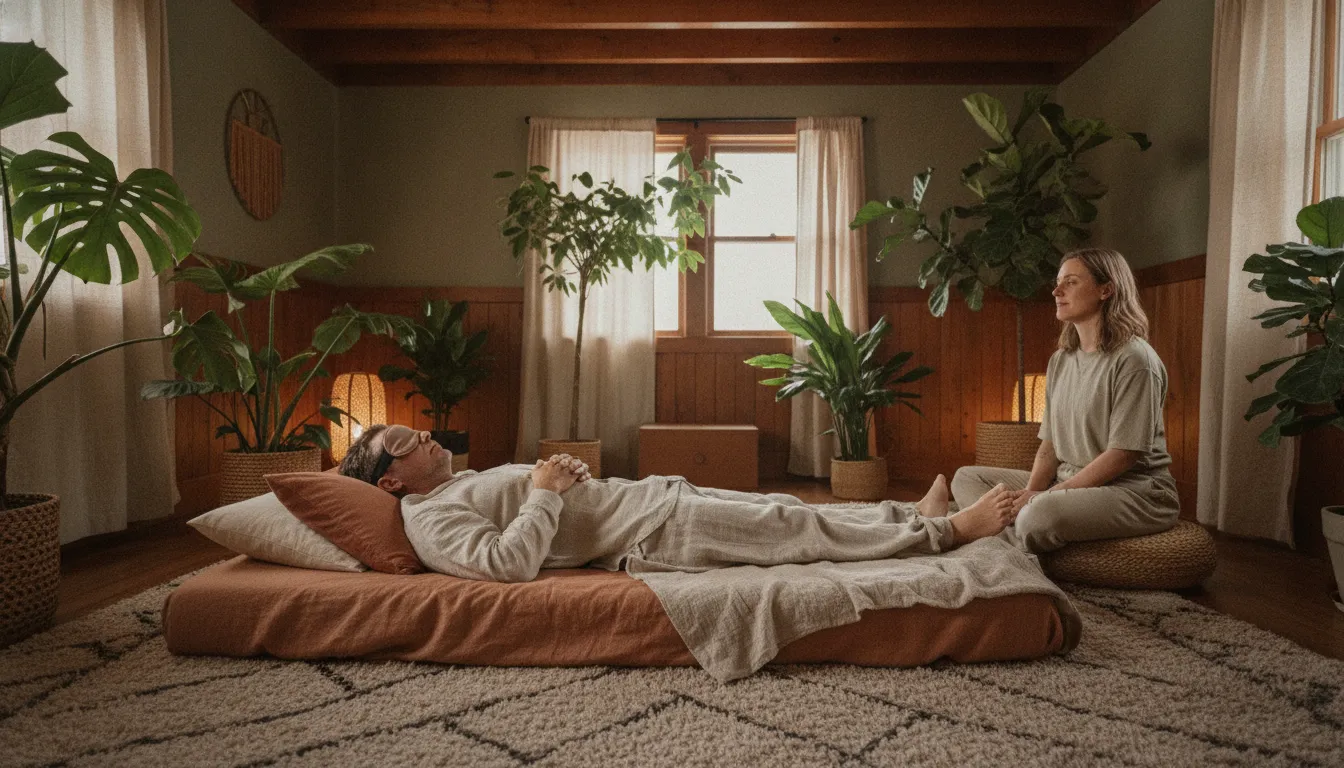
- Journey: The participant remains in a carefully held healing environment with trained support, consent-based care, and attention to physical and emotional safety.
- Integration: The participant reflects on what arose and considers how to bring meaning into ordinary life, without having someone else dictate what the experience means.
For veterans, preparation may include a careful conversation about trauma history, current symptoms, sleep, relationships, medications, prior experiences, support at home, and the difference between a meaningful spiritual experience and a promise of symptom change. A trauma-informed container should leave room for autonomy. It should not pressure someone to disclose more than they are ready to share or imply that a difficult experience represents failure.
Read Entheogyn's explainer on preparation, journey, and integration
What Medical Screening and Supervision Are Provided for Veterans?
Screening is not a formality. It is the point where a licensed program determines whether a session is appropriate, what questions require additional review, and whether the timing is right. Entheogyn describes a physician-reviewed intake that considers medical history, current medications, psychiatric history, family history, contraindications, and possible interactions before a session is scheduled.
A veteran should expect direct questions and should answer them fully. Relevant information may include current or recent mental health symptoms, cardiovascular history, seizure history, medication changes, sleep disruption, substance exposure, prior manic or psychotic symptoms, and any concern about personal safety. The purpose is not to judge a veteran's history. It is to identify risk, clarify uncertainty, and protect informed consent.
Medical oversight also has limits. A licensed natural medicine service cannot promise that psilocybin will resolve PTSD, and it does not replace an emergency department, a crisis line, a VA clinician, or an existing therapist. Anyone experiencing immediate danger, suicidal intent, severe confusion, or a medical emergency should seek urgent help through local emergency services or the Veterans Crisis Line at 988, then press 1.
Supervision should include more than having another person in the room. Ask how staff respond to distress, how consent is revisited, what physical support is optional, how privacy is protected, how notes are handled, and what happens after the journey. Ask whether the service has a clear plan for integration and for coordination with outside clinicians when the participant gives permission.
A veteran may also want to ask how the center approaches military and cultural identity. Respectful care does not turn military service into a marketing story. It recognizes that veterans are not a single group and that combat exposure, service branch, discharge experience, family context, disability, race, gender, and community support can shape the questions a person brings into the room.
How Can a Veteran Explore Colorado's Licensed Psilocybin Program?
The first step is a conversation, not a commitment. Contact the center and ask about current eligibility, licensing, medical screening, preparation, integration, privacy, and total costs. A relationship-first consultation should give a veteran space to ask difficult questions without pressure to schedule a journey.
- Confirm the legal and geographic setting. Ask where services occur, whether the location is licensed, and which state rules govern the session. Colorado access does not change federal law.
- Ask who reviews medical information. Confirm whether a physician or other qualified medical professional reviews medications, health history, psychiatric history, and contraindications.
- Understand the three phases. Request a clear explanation of preparation, the journey, and integration, including how many conversations occur before and after the session.
- Discuss consent and support. Ask how consent is established and revisited, what physical contact is optional, how distress is handled, and who remains present.
- Plan for continuity. Ask how integration relates to existing therapy or VA care and what communication is possible with outside clinicians when you authorize it.
- Review costs carefully. Entheogyn states that medicine cost is separate from therapy session pricing. Ask for current written details about what each fee includes before making a decision.
Entheogyn's approach is grounded in the belief that the medicine is the teacher and the participant is the student. Facilitators support the integrity of the container rather than promising to direct an outcome. That philosophy can be especially important for veterans who have experienced systems that made decisions about their bodies or stories without enough agency.
The broader Colorado framework is still developing. Rules, licensing details, research, and professional standards may change. Veterans should verify current information with the state and with the center directly. A consultation can help determine whether the service is appropriate to explore, but it cannot promise a particular clinical result.
Before contacting a center, write down your questions, the names and doses of current medications, relevant medical history, and the people you want involved in your care decisions. You do not need to arrive with a fixed interpretation of what healing should look like. You do need enough information to make a voluntary, informed choice.
Talk with Entheogyn about Colorado psilocybin therapy for PTSD-related healing questions
Frequently Asked Questions
Is psilocybin therapy for PTSD available to veterans in Colorado?
Colorado's licensed natural medicine framework allows eligible adults 21 and older to explore supervised psilocybin services at licensed healing centers. Veteran status alone does not establish candidacy. Each center must evaluate medical and psychological factors, and Colorado access is separate from VA care, federal approval, and clinical-trial enrollment.
Does psilocybin cure PTSD?
No. Current veteran research is early, and a small pilot cannot predict an individual outcome. Psilocybin therapy is not an FDA-approved cure for PTSD. A responsible program describes uncertainty, screens carefully, supports preparation and integration, and avoids promises about symptom remission or permanent change.
What happens before a veteran's psilocybin session?
Before a session, a licensed center should explain the legal setting, review health and medication history, screen for contraindications, establish consent, discuss intentions, and prepare the physical and emotional setting. At Entheogyn, preparation is one phase of a larger arc that also includes the journey and integration.
Can a veteran continue VA care while exploring Colorado natural medicine services?
A Colorado service is not a substitute for VA care or an emergency resource. Veterans should discuss major health decisions with qualified clinicians who know their history. Ask the center how it handles coordination with outside clinicians when the participant provides permission, and keep established crisis and medical support available.
Is medicine included in Entheogyn's therapy session pricing?
No. Entheogyn states that medicine cost is separate from therapy session pricing. Ask the center for current written pricing and a clear explanation of what preparation, the journey, integration, and medical support include before scheduling.
Contact Entheogyn to ask grounded questions about licensed Colorado psilocybin therapy